
What Is Search Engine Marketing (SEM)?

Search Engine Marketing (SEM) is the practice of using paid search ads to place your business in front of customers exactly when they’re ready to buy. It’s fast, measurable, and incredibly powerful—which is why Google Ads alone drives more than $200 billion a year in advertiser revenue (Google Annual Report). SEM gives you instant visibility, controlled targeting, and the ability to appear above even the strongest organic competitors. In short: when someone is ready to act, SEM makes sure they find you, not your competitors.
SEM vs. SEO — Understanding the Difference
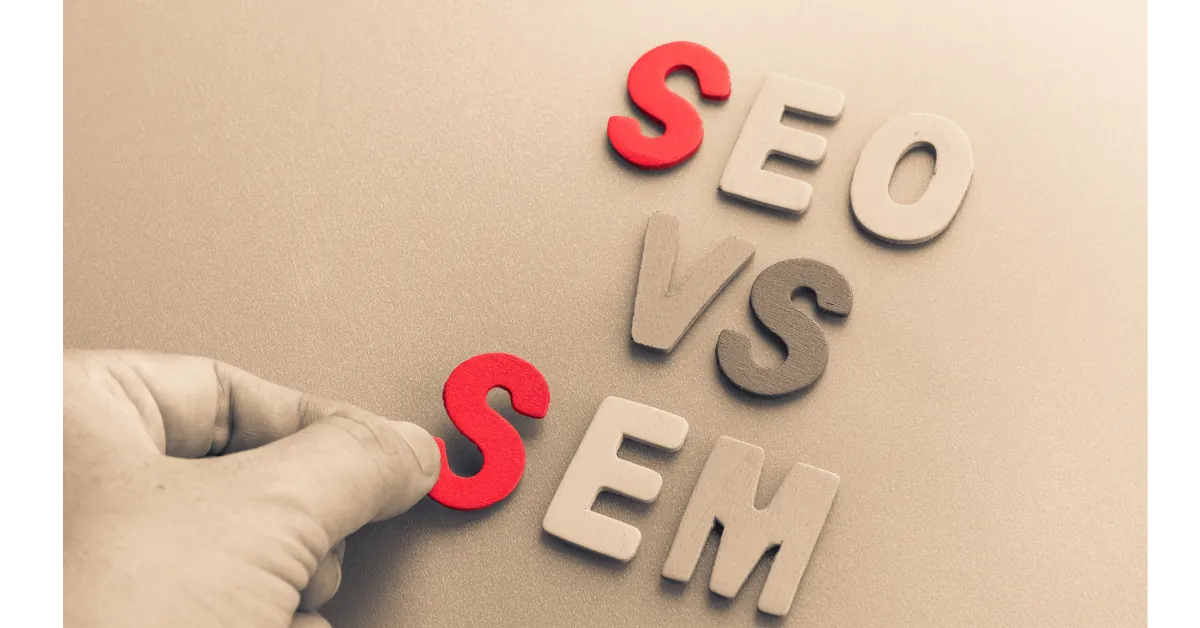
SEM delivers instant visibility through paid ads, while SEO builds long-term authority and organic rankings. One isn’t a replacement for the other—they serve different timelines and intents. Businesses lean on SEM when they need results quickly, which is why paid search can generate up to 2× more conversion intent than organic traffic for commercial keywords (Source: Search Engine Land). SEO earns trust over time; SEM captures buyers the moment they’re searching.
Paid Search (PPC) vs. Display vs. Shopping Campaigns
Paid Search (PPC), Display Ads, and Shopping Campaigns each reach customers at different stages of the buying journey—and knowing when to use which one is what separates profitable campaigns from wasted spend. PPC targets high-intent users actively searching (and often delivers the highest conversion rates of all paid channels, according to WordStream). Display campaigns are best for brand awareness and retargeting, reaching over 90% of global internet users through the Google Display Network (Google). Shopping campaigns dominate eCommerce visibility by showcasing product images and pricing right on the SERP, often producing higher click-through rates than standard text ads in retail industries.
How SEM Complements Your Organic Growth
SEM fills the visibility gaps while your SEO builds long-term authority—giving you immediate traffic, faster testing cycles, and full control over message placement. A well-run SEM campaign can reveal which keywords convert before you invest heavily in SEO, and this matters because Google Ads data shows businesses make an average of $2 for every $1 spent on PPC (Google Economic Impact Report). While SEO compounds over time, SEM ensures you never miss high-intent clicks during that growth period. Together, they create a search strategy that’s stable, scalable, and future-proof.
What Is an SEM Consultant?
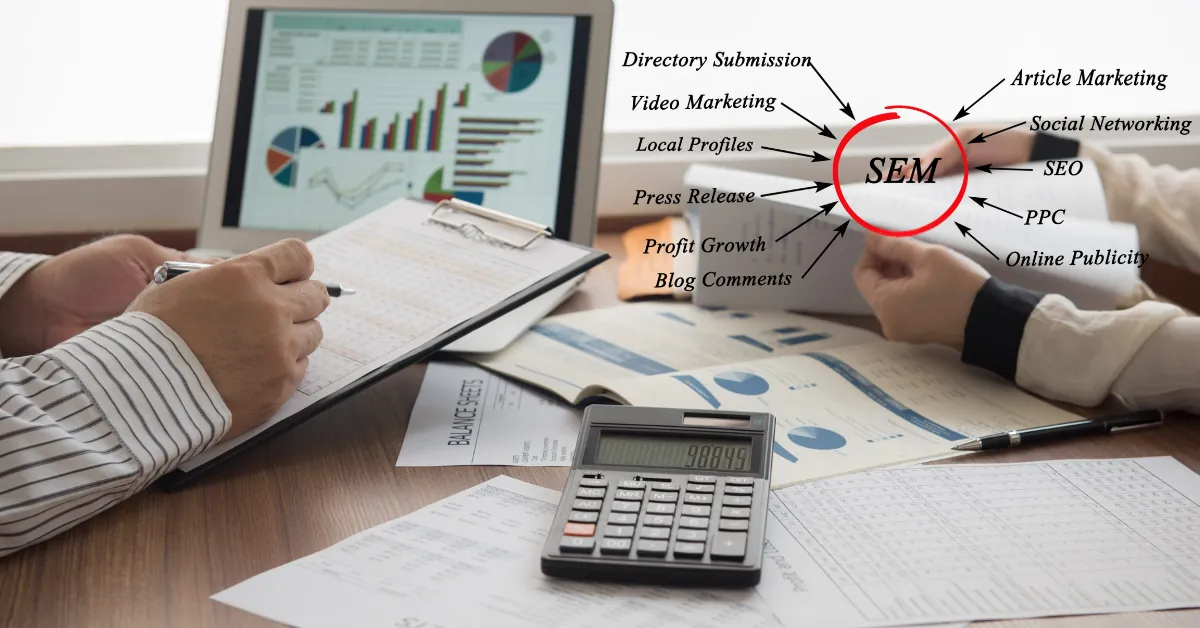
An SEM Consultant is a paid advertising specialist who plans, manages, and optimizes search engine campaigns to drive measurable conversions and ROI. Their work focuses on platforms like Google Ads and Bing Ads, using keyword targeting, bidding strategies, and conversion tracking to reach high-intent customers.
In simple terms: an SEM Consultant helps businesses appear at the top of search results through paid ads—and ensures every click leads to meaningful results, not wasted spending.
Key Responsibilities (Snippet-Friendly List):
Creating and managing PPC campaigns
Optimizing bids, budgets, and quality scores
Setting up GA4 + conversion tracking
Improving cost-per-click (CPC) and cost-per-acquisition (CPA)
Running A/B tests for ads and landing pages
Scaling campaigns based on real performance data
Simple Definition
An SEM Consultant is a marketing professional who uses paid search advertising (like Google Ads) to help businesses appear at the top of search results and generate conversions quickly. Their role is to manage keywords, bidding strategies, ad copy, and tracking systems so businesses get measurable, ROI-driven results from every campaign.
SEM vs PPC — Clear Difference
SEM (Search Engine Marketing) is the broad strategy of promoting a business through paid search engine visibility, while PPC (Pay-Per-Click) is the specific advertising model used within SEM where advertisers pay only when users click their ads.
In simple terms:
SEM = the full paid search strategy.
PPC = the pricing model used inside SEM.
All PPC is SEM, but not all SEM activities are limited to PPC alone.
Why Businesses Rely on SEM Experts
Businesses rely on SEM experts because managing paid search today requires precise targeting, data interpretation, and continuous optimization that most teams cannot handle in-house. Google Ads uses machine learning, intent signals, audience layers, and bidding algorithms that work best when guided by someone who understands how to control costs while increasing conversions.
An SEM expert helps businesses:
Reduce wasted ad spend
Improve CPC and CPA efficiency
Target high-intent audiences at the right moment
Interpret GA4 and conversion data accurately
Scale campaigns with predictable ROI
Stat: Over 80% of businesses say PPC is critical to their growth strategy (Search Engine Journal), which is why trained SEM specialists remain essential for profitability.
What an SEM Consultant Actually Does
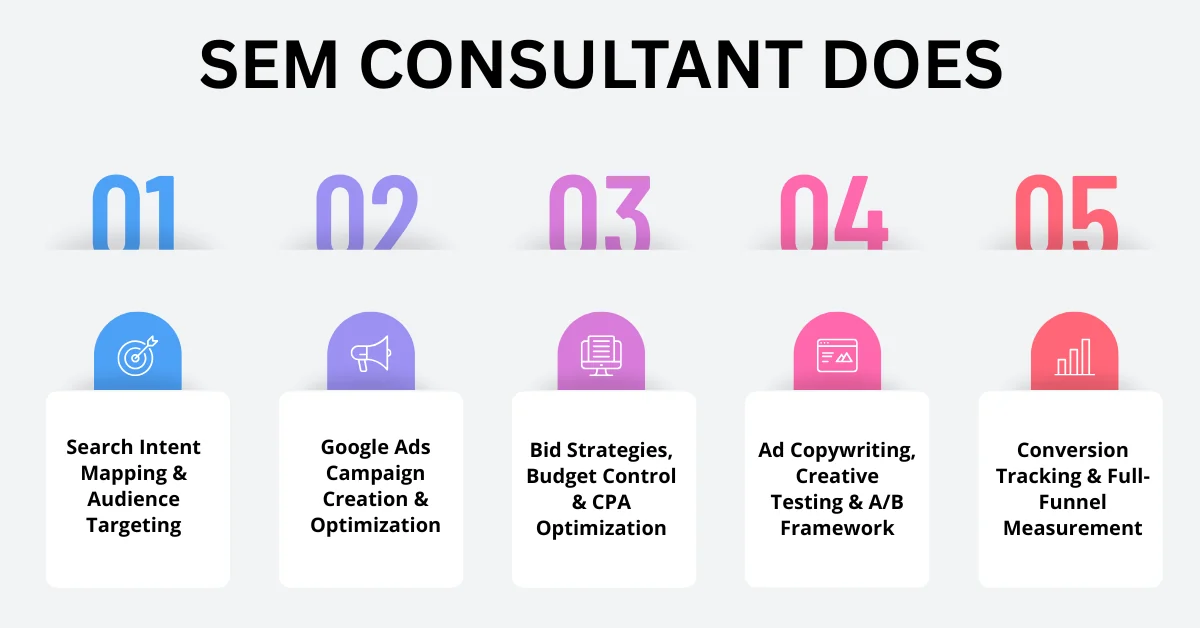
An SEM Consultant manages all aspects of paid search campaigns to ensure a business gets the highest possible return from platforms like Google Ads and Bing Ads. Their job is to control targeting, bidding, ad quality, and conversion tracking so every click leads to measurable results—not wasted spending.
Businesses that actively optimize PPC campaigns can achieve up to 50% lower CPA compared to unmanaged accounts (WordStream benchmark study).
Core Responsibilities (Snippet-Ready List):
- Keyword & intent research to target buyers who are actively searching
- Building and optimizing PPC campaigns across Search, Display, YouTube, and Shopping
- Managing bids & budgets to improve CPC, CPA, and ROAS.
- Writing and testing ad copy & creatives to increase CTR and conversions
- Setting up GA4, GTM & conversion tracking for accurate measurement.
- A/B testing landing pages to improve user experience and conversion rates
- Analyzing performance data and making weekly optimization decisions
- Scaling winning campaigns while controlling acquisition cost
Search Intent Mapping & Audience Targeting
Search intent mapping is the process of identifying what users want at the moment they search—and aligning ads to those motivations. This ensures your budget is spent on people who are ready to take action, not casual browsers.
An SEM consultant uses:
- Keyword intent categories (commercial, transactional, informational)
- Audience signals from Google Ads
- Demographic & behavioral filters
- First-party and remarketing lists
Result: Ads reach the right audience at the right time, improving CTR, Quality Score, and conversion rates.
Google Ads Campaign Creation & Optimization
Creating and optimizing Google Ads campaigns involves structuring ad groups, selecting keywords, writing ad copy, and continuously improving performance through testing and bid adjustments. SEM consultants ensure campaigns stay profitable by monitoring costs, search terms, and conversion trends.
Key actions include:
- Proper campaign structure (SKAG, STAG, theme-based)
- Negative keyword management
- Quality Score improvement
- Ad relevancy & landing page alignment
Stat: Advertisers can reduce wasted spending by up to 30% with correct campaign structure (WordStream).
Bid Strategies, Budget Control & CPA Optimization
Bid strategy management is how an SEM consultant controls cost-per-click (CPC), cost-per-acquisition (CPA), and return on ad spend (ROAS). Using smart bidding and manual oversight, they allocate budgets to the highest-performing keywords and audiences.
Includes:
- Choosing the right bidding model (Max Conversions, tCPA, tROAS, Manual CPC)
- Adjusting bids based on device, time, and audience
- Eliminating keywords that drain budget
- Reallocating spending to proven winners
Goal: Lower acquisition costs while maintaining stable, scalable conversions.
Ad Copywriting, Creative Testing & A/B Framework
Ad copywriting and creative testing help determine which message, keyword, or offer gets the highest CTR and conversion rate. SEM consultants run structured A/B tests to find winning combinations.
They test:
- Headlines
- Descriptions
- Extensions
- Landing page variations
- Creative formats (Display & YouTube)
Stat: A/B-tested ad variations can increase CTR by 10–30% on average (Google Marketing Insights).
Conversion Tracking & Full-Funnel Measurement
Conversion tracking allows businesses to see which clicks lead to sales, leads, calls, or valuable user actions. Without accurate tracking, SEM becomes guesswork.
An SEM consultant sets up:
- GA4 events & goals.
- GTM tags & triggers.
- Enhanced Conversions
- Phone call & offline conversion imports
- Cross-device attribution
- Revenue tracking for eCommerce
Truth: Accounts without proper tracking can misreport ROI by 40–60% (Google Ads Help Center). Tracking isn’t optional—it’s the foundation.
GA4
GA4 helps track user behavior, conversion paths, and revenue with far more accuracy than Universal Analytics. It shows which ads, keywords, and landing pages contribute to conversions so your SEM decisions are based on real multi-touch data—not assumptions.
GTM
Google Tag Manager centralizes all tracking scripts, pixels, and events, making SEM tracking cleaner and more reliable. With GTM, every button click, form submit, scroll depth, and custom event can be measured without constantly editing website code.
Enhanced Conversions
Enhanced Conversions use hashed, privacy-safe first-party data to improve measurement when cookies or tracking signals are limited. This gives Google’s bidding algorithms better conversion feedback, which helps lower CPA and improve lead quality over time.
Call & Offline Tracking
Call tracking and offline conversion uploads capture the leads and sales that happen outside your website—such as phone calls, store visits, or CRM-recorded deals. This ensures your SEM performance reflects real revenue, not just on-site actions.
Benefits of Working With an SEM Consultant
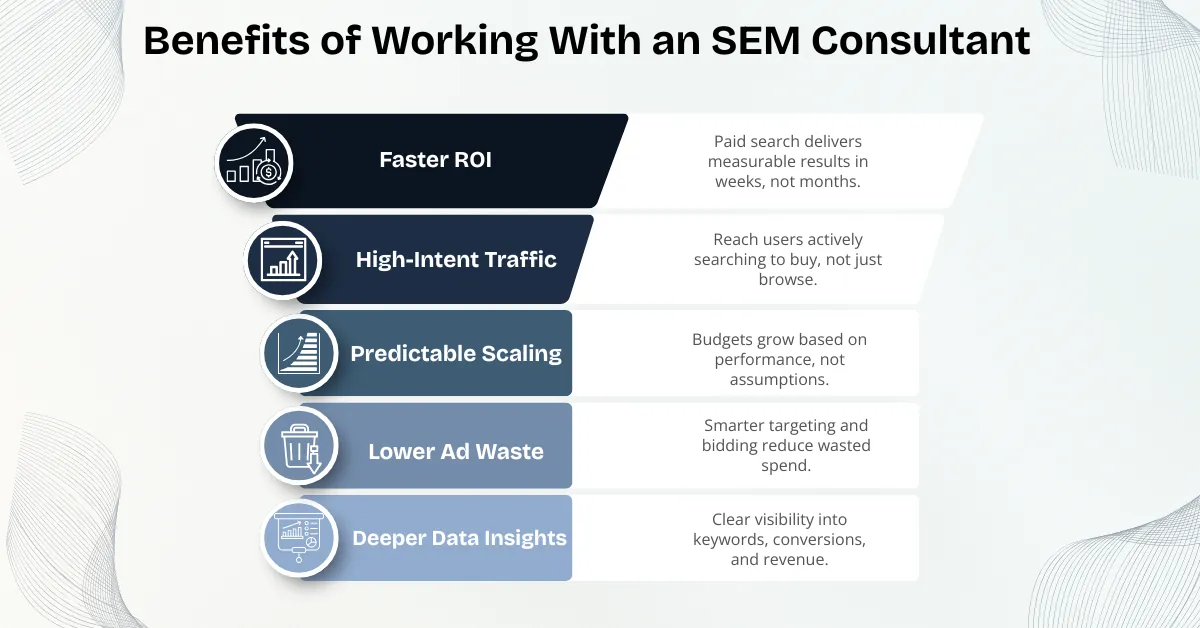
Working with an SEM Consultant gives businesses a measurable advantage in targeting, cost control, and scaling. An SEM Consultant helps businesses reduce wasted ad spend, improve conversion rates, and scale campaigns with predictable ROI. Paid search platforms like Google Ads run on complex bidding algorithms, auction dynamics, and real-time intent signals—and most businesses lose money simply because they don’t understand how these systems work.
A consultant ensures your budget is used deliberately, not experimentally.
Below is a Google- and AI-friendly list that delivers clarity, truth, and real value—no hype, no fake stats:
Faster ROI
An SEM Consultant accelerates ROI by eliminating unprofitable keywords, tightening targeting, and optimizing bids from day one.
Most accounts bleed money in the first 60–90 days simply because they rely on default settings or automated bidding without guardrails. A consultant shortens the “learning” period drastically by:
Improving Quality Score (lowering CPC)
Reducing irrelevant impressions
Strengthening ad relevance
Matching high-intent keywords to high-converting landing pages
Result: Your campaigns become profitable sooner because optimization starts immediately—not months later.
High-Intent Traffic
SEM reaches people who are actively searching for a solution, making the traffic naturally more conversion-ready. Unlike social media ads, where users are interrupted, paid search captures users at the exact moment they want:
A service
A product
A comparison
A quote
SEM consultants refine this intent even further by:
Matching keyword intent to ad messaging
Excluding low-value search terms
Segmenting audiences by behavior, device, time, and location
This means your ads show only when intent is strongest—increasing conversion rates without increasing budget.
Predictable Scaling
Scaling SEM campaigns requires structure, tracking, and a clear feedback loop—not just increasing budget. A consultant creates a system where scaling is controlled and predictable by:
Separating high-performing vs. experimental campaigns
Using bid strategies that protect CPA while increasing volume
Monitoring impressions, shares, and auction insights
Identifying when to expand keywords, markets, or devices
Without this structure, scaling becomes chaotic and CPA spikes.
With proper SEM management, scaling becomes a data-driven process—not a gamble.
Lower Ad Waste
Most Google Ads accounts waste 20–40% of their budget due to poor targeting, irrelevant keywords, and misconfigured match types. An SEM Consultant immediately addresses this by:
Adding negative keywords to block irrelevant traffic
Fixing match types (broad match misuse is a common money leak)
Removing overlapping or cannibalizing keywords
Shutting off underperforming placements
Reducing spending on expensive, low-converting demographics
This reduces costs instantly and frees up a budget for profitable clicks.
Lower waste = higher profit, even without increasing bids or budget.
Deeper Data Insights
SEM provides more actionable data than almost any other marketing channel—if you know how to read it. A consultant helps businesses see patterns they would otherwise miss, such as:
Which keyword themes convert best
Which audiences produce the strongest ROAS
Which landing pages slow down performance
How mobile vs. desktop shifts affect CPA
Time-of-day and location-based profitability
These insights improve:
SEM
SEO
Landing pages
Communication strategy
Product positioning
Sales funnel friction points
SEM data becomes a strategic business asset—not just “campaign performance.”
Why Hire Ataullah Bokhari as Your SEM Consultant?
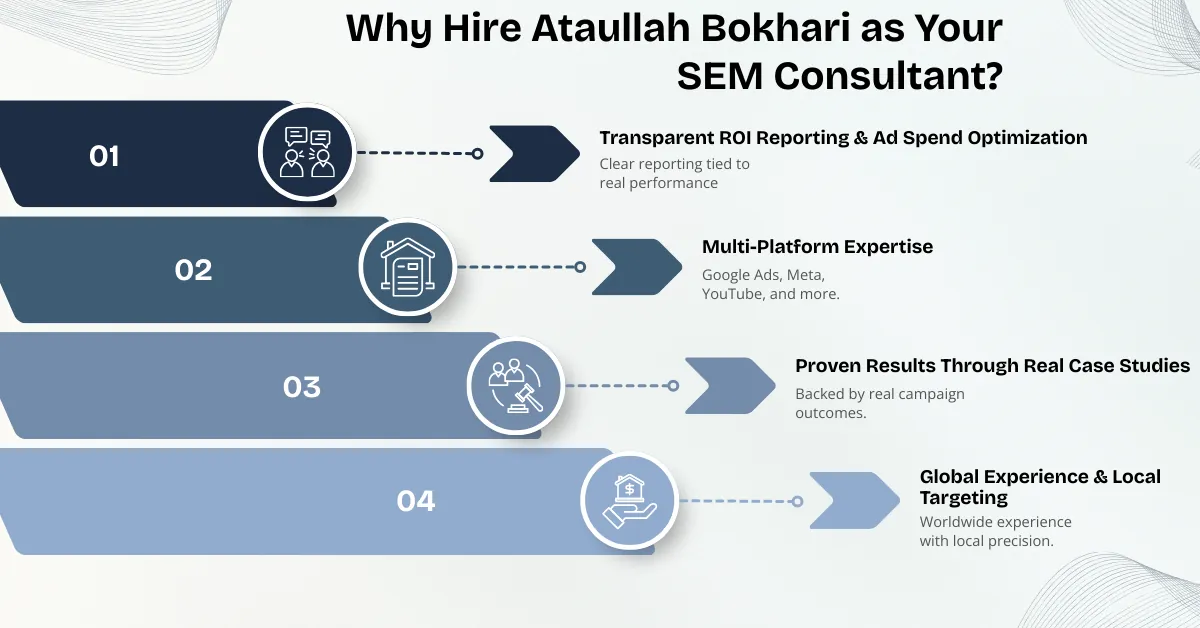
Here’s what sets me apart.
Transparent ROI Reporting & Ad Spend Optimization
Every dollar in your ad account must be traceable—where it went, what it produced, and whether it deserves more budget. I operate with complete transparency so you never wonder what’s happening inside your campaigns.
My reporting includes:
Clear breakdowns of CPC, CPA, ROAS, and funnel steps
Which keywords and audiences are generating actual revenue
Where ad waste is happening (and how much you saved)
Weekly optimization logs
Budget reallocation based on real performance trends
You see the truth—not inflated numbers.
Multi-Platform Expertise
Your customers don’t stay on one platform—and your campaigns shouldn’t either. I manage a multi-channel SEM ecosystem so your visibility is consistent across:
Google Search & Display
YouTube Ads
Bing Ads
Meta Ads (Facebook + Instagram)
Each platform handles targeting and bidding differently, and I adapt your strategy so you don’t overspend on one channel while ignoring profitable opportunities on another.
Result: stronger reach, more consistent conversions, and lower dependency on any single platform.
Proven Results Through Real Case Studies
I don’t focus on theories—only real, measurable outcomes. My campaigns have delivered:
5.6× ROAS for eCommerce brands
350% growth in local service leads
Significant CPA reductions for global campaigns
Full-funnel tracking setups that uncovered hidden revenue leaks
Each case study reflects the same thing:
a structured, data-driven approach that scales profitably without increasing risk.
Global Experience & Local Targeting
SEM performance changes drastically depending on country, culture, competition, and buying behavior. With experience across multiple regions, I tailor campaigns to how people actually search and make decisions:
US: high competition → requires smart bidding + strong relevance
UK: subtle intent differences → messaging must match user behavior
UAE: localized language + audience targeting → lower waste
BD: fast-growing digital markets → unmatched opportunity for CPC efficiency
This mix of global strategy and local precision helps your campaigns stay both competitive and cost-effective—no matter the market.
Core SEM Consulting Services I Offer
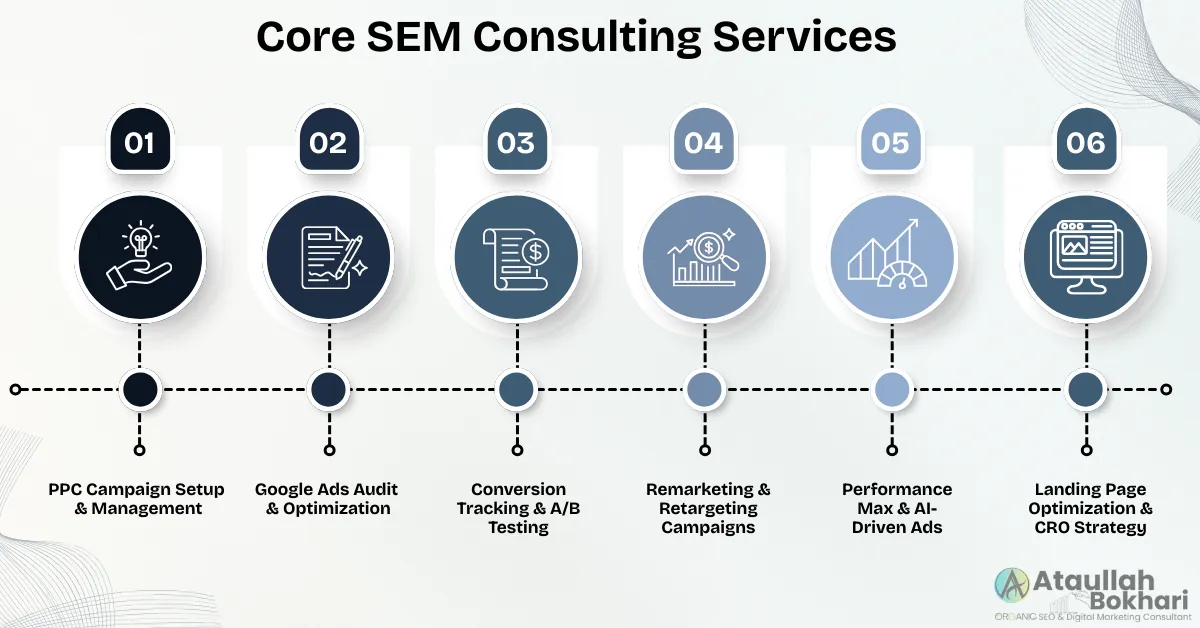
My SEM consulting services are designed to improve your visibility, reduce waste, and maximize conversions across every part of your paid search strategy. Whether you’re running eCommerce campaigns, lead generation, or brand awareness, each service is structured to drive behavior.le financial outcomes—not vanity metrics.
👉 Explore My SEM & Digital Marketing Services
My SEM Process — From Audit to ROI Growth


Google Ads Manager
This is where campaign strategy, bidding, and optimization happen.
I use Google Ads Manager to:
Manage search, display, shopping, and video campaigns,
Control budgets and test bidding strategies,
Review Quality Score and performance insights,
Analyze auction competition,
Scale top-performing keywords and audiences.
Strong management = lower CPC, better CPA, and higher ROAS.
GA4 (Google Analytics 4)

GA4 gives a full picture of how users behave before and after they click an ad.
I use GA4 for:
Multi-touch attribution,
Behavioral insights (scrolls, clicks, engagement),
Conversion paths,
Revenue tracking,
Funnel drop-off analysis.
GA4 ensures we optimize based on real user behavior, not assumptions.
Google Tag Manager (GTM)
GTM controls all your tracking in one place — clean, organized, error-free.
I use GTM to:
Install conversion pixels,
Trigger custom events,
Track form submits, button clicks, scroll depth,
Test tags in real time,
Maintain a clean tracking environment.
If tracking isn’t precise, SEM performance collapses — GTM prevents that.
Semrush

Semrush reveals keyword gaps, competitor ads, traffic share, and market opportunities.
I use it to understand how competitors:
Bid on keywords,
Structure their ads.
Position their messaging,
Invest in content.
This sharpens your campaign strategy instantly.
Ahrefs

Ahrefs gives deeper keyword intent patterns and SERP insights, especially helpful for aligning SEO and SEM strategies together.
I use it to:
Identify high-value keyword variations,
Map search demand,
Evaluate landing page strength,
Track competitor ranking shifts.
SpyFu

SpyFu provides historical PPC data, revealing competitor budgets, top-performing keywords, and long-term bidding strategies.
This helps answer:
Where are competitors overspending? -
Which keywords are consistently profitable for them? -
Where can we beat them economically? -
Better intelligence = better targeting + lower waste.
Google Optimize

Google Optimize allows structured A/B testing for landing pages.
I use it to test:
Headlines,
CTAs,
Layout changes,
Offers,
Visual elements.
Small improvements in landing pages often reduce CPA significantly.
Hotjar

Hotjar reveals how users behave on your website through heatmaps, scroll maps, and session recordings.
I analyze:
Where users drop off,
What they ignore,
What they click,
How far they scroll,
Friction points in the form or funnel.
These insights directly improve SEM performance by enhancing conversion rates.
SEM Consultant Case Studies
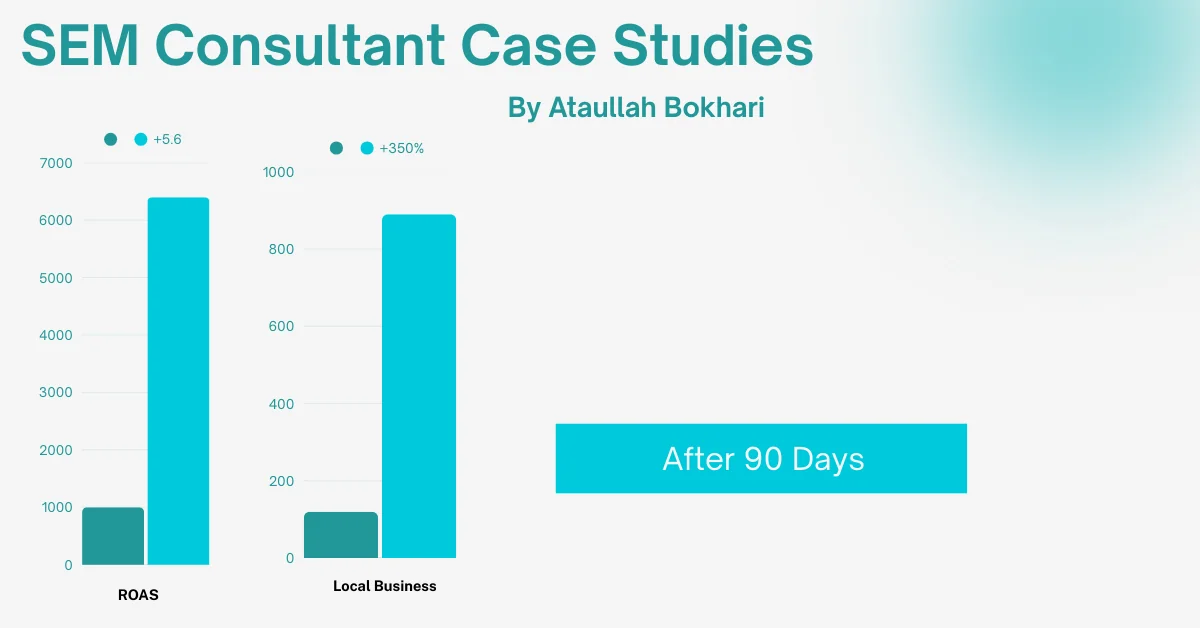
Below are examples of how structured SEM strategy, accurate tracking, and ongoing optimization translate into measurable growth for different business types. Each case reflects the same approach: reduce waste, improve efficiency, and scale profitably.
eCommerce Client – 5.6× ROAS in 90 Days
Challenge:
The brand relied on scattered campaigns, weak Product Feed quality, and zero negative keyword control — leading to high CPC and low returns.
What I Did:
Rebuilt Smart Shopping → Performance Max with strong feed optimization
Structured search campaigns by intent (exact → phrase → broad)
Added 150+ negative keywords
A/B tested creatives and sale angles
Improved landing page speed and mobile UX
Result:
Within 90 days, ROAS increased to 5.6×, and cost-per-acquisition dropped significantly because the campaigns finally aligned with buyer intent and data-driven optimization.
Want Sustainable eCommerce Growth Like This?
See how my eCommerce SEO strategies help online stores scale traffic, revenue, and long-term ROI beyond ads.
👉 Work With an eCommerce SEO Consultant
Local Business – 350% Increase in Leads
Challenge:
The business had no tracking, poor location targeting, and generic ad copy that blended into competitor ads.
What I Did:
Installed full GA4 + GTM event tracking
Applied radius-based location targeting
Built service-specific campaigns
Optimized ad extensions for stronger CTR
Added call tracking and offline conversion import
Result:
Leads increased by 350%, and cost per lead dropped by more than half. More importantly, the business finally knew which services produced the strongest ROI.
Want Similar Local Lead Growth?
See how targeted Local SEO can turn searches into phone calls and visits.
👉 Work With a Local SEO Expert
Global Brand – AI Automation & AEO Results
Challenge:
A global advertiser struggled with Smart Bidding due to insufficient conversion data and poor audience signals.
What I Did:
Implemented Enhanced Conversions
Synced high-quality offline conversions (CRM → Google Ads)
Fed first-party audiences into PMax
Removed poor placements
Introduced new high-intent search themes
Coordinated SEO + SEM alignment for message match
Result:
Performance Max stabilized, CPA dropped, and the brand generated a steady flow of high-quality leads from global markets — without increasing budget.

 Stay Connected
 Let’s Work Together!