

Ranking For Local SEO Near Me Search Terms
People often search using phrases like “near me” when they want something close by. It could be a restaurant, a hotel, or a service they need right now. These phrases are called near me search terms. They show strong local intent. The searcher is not browsing. They are ready to act.
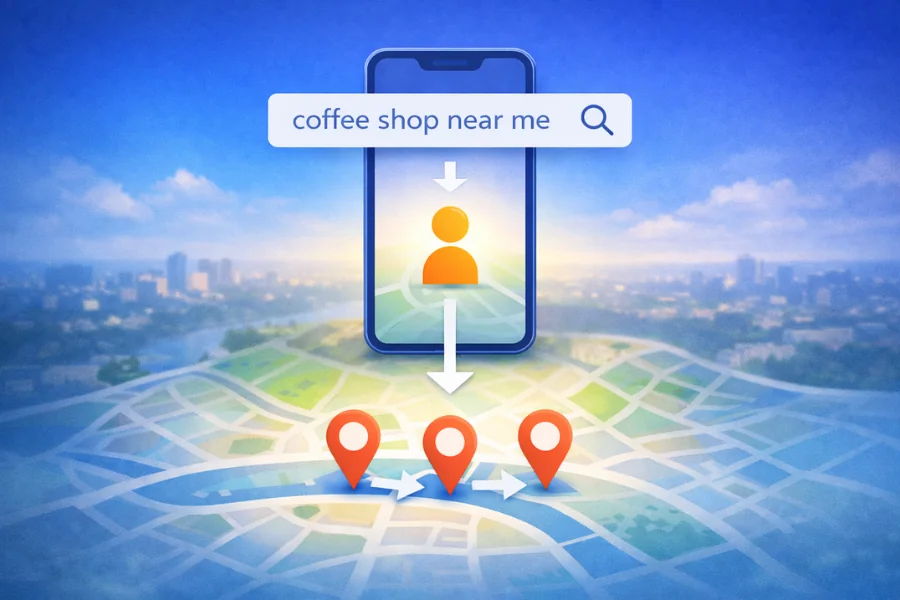
Near me search terms matter because they change how Google shows results. Google tries to understand where the person is and what they want nearby. Sometimes the words “near me” are typed. Sometimes they are not. But the local intent is still there.
This page explains what search terms are near me and how they fit into local SEO. It focuses on how Google understands these searches and why they influence local rankings. This content is not a how-to guide and not about services. It is a simple explanation of the concept, written so anyone can understand it.
What Are “Near Me” Search Terms in Local SEO?
Near me search terms are searches people use when they want results close to their current location. These searches tell Google that distance matters more than general information. The user wants something nearby, not across the city or in another country.
Google has shared that local-intent searches keep growing every year, especially on mobile. Studies often show that a large share of local searches lead to an action within the same day. This behavior is a core part of local SEO fundamentals and explains why Google treats these searches differently from normal keywords. Near me search terms fall into two clear types.
Explicit Near Me Search Terms
These are the easy ones to spot. The user clearly types words like “near me” or “nearby.”
Examples:
- restaurant near me
- hotel near me
- pharmacy nearby
These searches send a strong signal. Google knows the person wants close results right now. This is why maps and local listings often appear at the top. Mobile data supports this behavior. A large portion of “near me” searches happen on phones, often when users are outside or traveling. Speed and proximity matter more than long descriptions.
Implicit Near Me Search Terms
These searches do not include the words “near me,” but the intent is still local.
Examples:
- coffee shop open now
- car repair shop
- best dentist
Google uses context to understand these searches. It looks at:
- the user’s location
- the device being used
- time of day
For example, someone searching “coffee shop” on a phone at 8 a.m. is likely looking for a nearby place. Even without the words “near me,” Google treats it as a local search.
This is why, near me, search terms are not only about words. They are about intent, location, and timing working together.
How Google Understands Near Me Search Terms
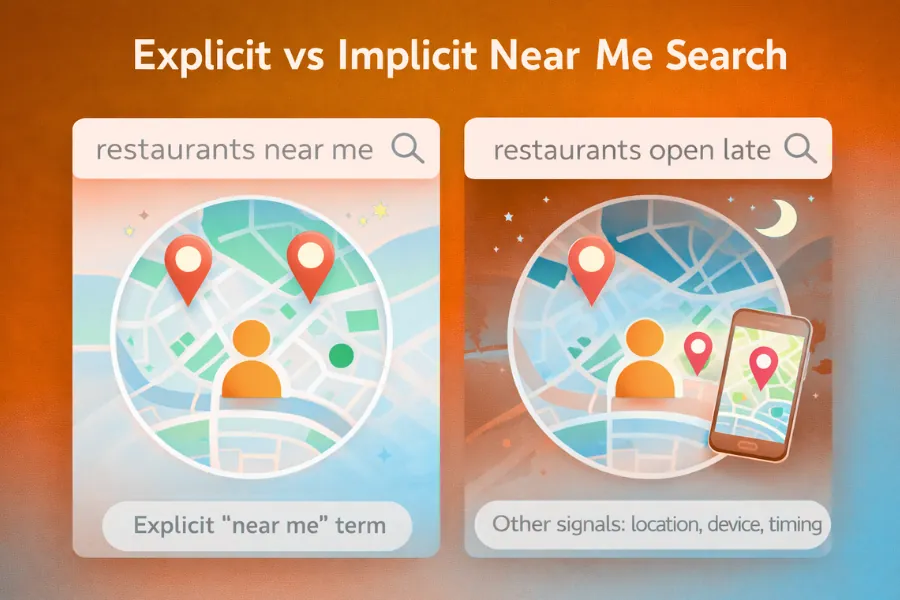
Google does not rely only on the words a person types. It tries to understand context. When a search shows local intent, Google shifts its focus to distance and relevance.
Over the years, Google has shared that many local searches do not include location words at all. Yet they still trigger local results. This shows that Google looks beyond keywords and reads the situation around the search.
How Location Is Determined Without the Phrase “Near Me”
Google uses several signals to understand where the searcher is. The most common ones are
- Device location from GPS or network signals
- IP-based location
- Saved location settings in the user’s account
For mobile searches, this works even faster. A large share of local searches happen on mobile devices, where location signals are more accurate. This allows Google to show nearby results even when the query is very short.
For example, searching “hotel” while standing in a city center usually shows nearby hotels. The user never typed “near me,” but Google already knows proximity matters.
Search Context vs Exact Keyword Matching
In the past, matching the exact keyword mattered more. Today, context matters more than exact wording.
Google looks at:
- Search history
- Time of day
- Device type
- Previous local interactions
If someone searches “pizza” late at night on a phone, Google assumes local intent. The results focus on nearby places that are open. The same word searched on a desktop during the day may show broader results.
This is why near me search terms work even when the phrase is missing. Google is not just matching keywords. It is interpreting intent based on real-world signals.
Do Near Me Search Terms Still Influence Local SEO Rankings?
Yes, near me search terms still influence local SEO rankings, but not in the same way they did years ago. Google no longer depends on the phrase “near me” alone. Instead, it focuses on local intent.
Earlier, adding “near me” to a search was a strong signal. Today, Google understands location even without those words. This means the influence comes from how the search is interpreted, not from the phrase itself.
Data shared by Google over time shows that searches with local intent often lead to quick actions. Many users visit a location or contact a business within hours of searching. This behavior is one of the core reasons why local SEO fundamentals matter in modern search results.
Near me search terms still matter because they help Google confirm what the user wants. They reinforce proximity and urgency. But they are only one part of the picture. Location signals, context, and relevance now play a larger role than the words alone.
In simple terms, near me search terms still affect rankings. They just work through intent and context, not keyword matching.
Types of Near Me Search Terms Associated With Local Intent
Not all near me searches mean the same thing. Google groups them by intent. Understanding these types helps explain why some searches trigger strong local results.
Research shared across local search studies shows that a large portion of near me searches are tied to immediate needs. Many of these searches lead to real-world actions the same day. That behavior is why Google treats these queries as high-value local signals. There are three main types of near me search terms.
Service-Based Near Me Searches
These searches are about finding a service close by. The user usually needs help now or very soon.
Examples:
- plumber near me
- car repair near me
- dentist near me
Service-based searches often happen during a problem or urgent situation. Local search data consistently shows that service queries are among the highest-converting local searches. Users are not comparing for long. They want nearby options they can trust. Because of this urgency, Google strongly favors location and relevance when ranking results for these searches.
For service businesses like plumbing, near-me searches usually lead to fast actions like calls. A plumber-focused local SEO setup needs clear service pages, location signals, and a strong Google Business Profile.
Commercial-Intent Near Me Search Terms
These searches show buying or visiting intent. The user is deciding where to go or what to choose.
Examples:
- best restaurant near me
- hotel near me tonight
- store open now
Studies on local behavior often report that searches including words like “best,” “open now,” or “nearby” have higher engagement rates. These users are close to making a decision, not just researching. Google responds by showing results that combine proximity, popularity, and timing.
Brand-Associated Near Me Searches
These searches include a brand name along with local intent.
Examples:
- KFC near me
- Hilton hotel near me
- Nike store nearby
Brand-based near me searches usually come from users who already know what they want. Local data shows these searches have very high action rates because the decision is mostly made. In these cases, Google focuses on showing the closest and most relevant location tied to that brand. Distance and availability matter more than general information. Together, these types explain why near me search terms are powerful. They reflect real intent, not casual browsing, and that intent is what drives local search behavior.
Near Me Search Terms vs Location-Based Searches
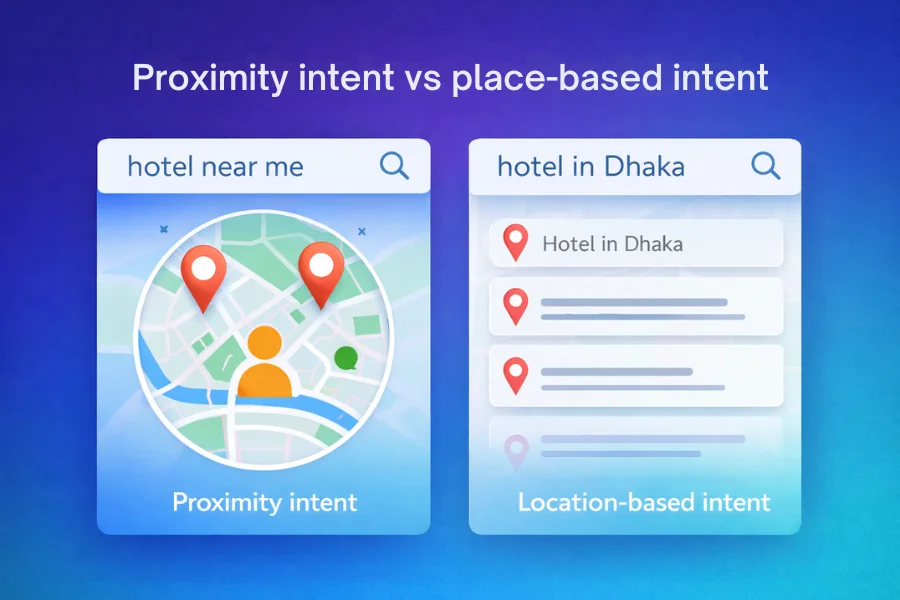
Near me search terms and location-based searches may look similar, but they mean different things. The key difference is intent.
Near me searches focus on proximity. The user wants results close to where they are right now. Distance matters more than the name of the place. This is why these searches often trigger map results and nearby listings.
Location-based searches use a specific place name.
Examples include:
- hotel in Dubai
- restaurant in London
- dentist in California
These searches show planned intent. The user is thinking about a known area, not just what is nearby. Google uses the location name as a clear signal and ranks results tied to that city or area.
Data from local search studies shows that near me searches are more common on mobile and often lead to faster actions. Location-based searches are more common during planning stages, such as booking or comparison.
In simple terms:
- Near me searches = “What is close to me right now?”
- Location-based searches = “What is available in this place?”
Both matter in local SEO, but Google treats them differently because the intent behind them is not the same.
Common Misunderstandings About Near Me Search Terms
There are many wrong ideas about how near me search terms work. These misunderstandings often come from older SEO advice that no longer applies.
One common myth is that websites must add the words “near me” everywhere to rank. This is not true. Google has said many times that it understands location without relying on exact phrases. Adding “near me” unnaturally does not improve results.
Another misunderstanding is that near me searches work only on mobile. While mobile searches are a big part of this behavior, local intent also appears on desktops and tablets. The difference is how Google reads context, not the device alone.
Some people believe near me searches are fading. The opposite is true. Local behavior studies continue to show growth in proximity-based searches, especially for urgent needs and same-day decisions. The biggest misunderstanding is the belief that “near me” search terms are merely keywords. They are not. They are signals of intent. Google responds to the search situation, not just the words typed.
Summary: How Near Me Search Terms Fit Into Local SEO
Near me, search terms are not just words people type. They show local intent. When someone uses these searches, Google understands that distance and relevance matter most. Some near me searches include the phrase clearly. Others do not. In both cases, Google looks at location, context, and timing to decide which results to show. This is why local results can appear even when the words “near me” are missing.
Near me search terms still play a role in local SEO because they help confirm intent. They support Google’s goal of showing nearby and useful results at the right moment. In simple terms, near me search terms fit into local SEO as signals, not shortcuts. They help Google understand what the user wants and how close the result should be.
Note: If you want a quick second opinion on your local visibility,
you can review my approach to Local SEO or reach me on WhatsApp.
FAQs
What does “near me” mean in local SEO searches?
In local SEO, “near me” means the searcher wants results close to their current location. It does not always depend on the exact words. Google looks at where the person is and tries to show nearby options that match the search.
Does Google need the phrase “near me” to show local results?
No. Google does not need the phrase “near me.” Many local results appear even when those words are missing. Google uses location signals, device data, and context to understand local intent.
Are near me search terms still relevant today?
Yes. Near me search terms are still relevant because they reflect strong local intent. Studies continue to show that these searches often lead to quick actions, such as visits or calls, which is why Google gives them high priority.
How are near me searches different from city-based searches?
Near me searches focus on proximity to the user’s current location. City-based searches focus on a named place or area. One is about what is closest right now, and the other is about what exists in a specific location.
