

Wix SEO Consultant: Technical SEO Strategy for Scalable Search Growth

A Wix SEO consultant helps improve how your Wix website performs in Google search. This includes fixing crawl and indexing issues, improving page structure, and aligning content with real search intent. The goal is simple. Make it easier for Google to understand your site and rank it correctly.

Wix supports modern SEO features like clean URLs, meta tags, and structured data. Google confirmed in 2019 that Wix websites can rank just like other platforms when set up correctly. The problem is rarely the platform itself. It is usually the structure and strategy behind it. Technical SEO makes that difference.

Ataullah Bokhari, Wix SEO consultant and technical SEO strategist

Quick Answer: What Does a Wix SEO Consultant Do?

A Wix SEO consultant helps your website rank higher in Google by fixing technical and structural issues. This usually starts with a Wix SEO audit to check crawl errors, indexing problems, and weak page setup. Then the focus shifts to technical structure, content optimization, and clear keyword targeting.

The goal is long-term ranking growth. Not quick tricks. Not temporary boosts. Proper SEO makes your Wix site easier for Google to understand and easier for users to trust.

How Wix’s Architecture Affects SEO Performance
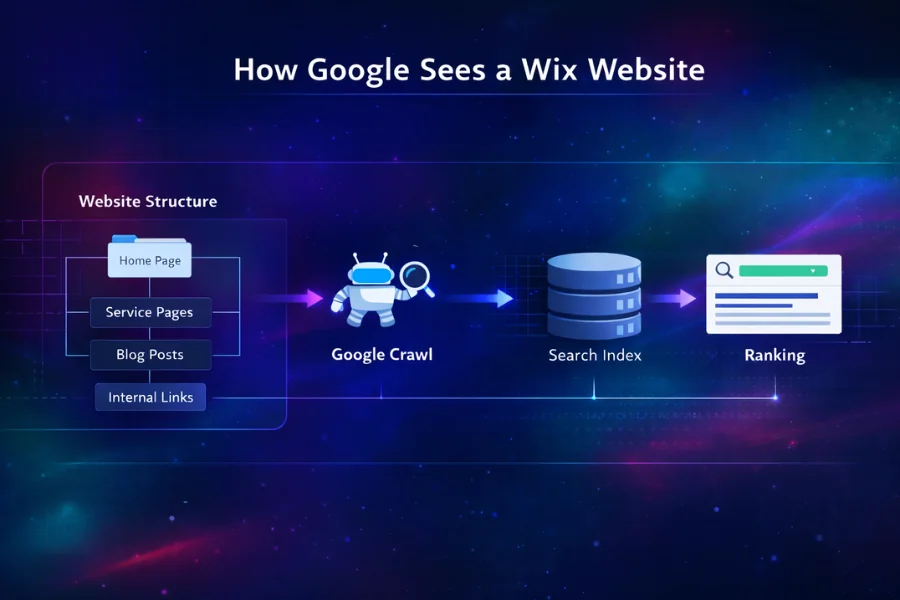
Diagram showing how Google crawls, indexes, and ranks a Wix website based on structure and internal links

Wix has improved a lot over the years. It now supports clean URLs, meta tags, redirects, and structured data. But like every content system, it has rules. Those rules shape how Google crawls, understands, and ranks your pages.

Many ranking problems are not caused by keywords. They come from structure. Platform structure plays a bigger role in rankings than most people realize. 

Let’s look at what matters inside Wix.

Crawlability & Indexing Control Inside Wix

Google must crawl your pages before they can rank. If pages are blocked, duplicated, or poorly linked, they may never show up in search. Wix allows control over indexing settings, redirects, and sitemap submission. But mistakes still happen. Pages can remain “discovered but not indexed” in Google Search Console. Blog tags or filter pages can create thin content. Weak internal linking can leave important pages buried.

A proper audit checks:

  • Which pages are indexed
  • Which pages are excluded
  • Whether internal links support crawl flow
  • If the sitemap reflects real priority

When crawl paths are clean, rankings become more stable.

URL Structure & Template Constraints

URL clarity affects both users and search engines. Wix allows custom URLs, but dynamic pages and templates can sometimes create structure limits.

For example:

  • Service pages may use similar templates without enough unique signals
  • Blog categories can create overlapping keyword targeting
  • Store pages may lack clear hierarchy

Search engines prefer clear structure.
Home → Category → Subcategory → Page.

If structure is flat or duplicated, ranking becomes harder. Fixing structure often improves performance without adding new content.

Core Web Vitals & Speed Limitations

Speed affects both rankings and user behavior. Google uses Core Web Vitals as part of its page experience signals. Wix runs on its own hosting system. That means you cannot control server-level optimization like you can with WordPress.

However, you can improve performance by:

  • Reducing large images
  • Limiting heavy apps
  • Avoiding too many animations
  • Cleaning unused pages

According to Google’s Web Vitals data, pages that meet Core Web Vitals thresholds tend to have lower bounce rates and better engagement. Speed does not guarantee rankings. But poor speed can hold them back.

Structured Data & Schema Implementation in Wix

Structured data helps Google understand what your page is about. It adds meaning behind the scenes. This can improve how your result appears in search, such as FAQ rich results or breadcrumb paths. Wix allows custom JSON-LD schema. That gives flexibility. But the level of control depends on how the platform handles templates and page structure.

Platform structure plays a bigger role in rankings than most people realize. Different content systems handle schema, templates, and crawl control in very different ways. Some allow deeper template-level control. Others rely more on built-in settings and automation.

In Wix, schema usually needs to be added carefully and matched to page purpose. Common types include:

  • Service schema for service pages
  • FAQ schema for question sections
  • Breadcrumb markup for hierarchy
  • Organization or Person schema for trust signals

When structured data matches the real content of the page, Google can interpret it more clearly. That clarity supports stable search visibility over time.

When Wix Works for SEO (And When It Doesn’t)

Wix works well for SEO when the website has clear structure, focused content, and manageable scale. It performs best for small service businesses, local companies, and simple websites with limited page depth. However, larger eCommerce sites or highly competitive industries may face structural limits as the site grows. The platform is not the problem. Growth complexity is. Now let’s look at where Wix performs best and where extra planning is needed.

Small Business & Service Websites

Wix works very well for local service businesses and simple websites.

If you run:

  • A local service business
  • A small agency
  • A portfolio site
  • A brochure-style website

Wix can be more than enough.

You usually need:

  • Clear service pages
  • Proper keyword targeting
  • Strong internal linking
  • Correct indexing setup

For these sites, the structure is not complex. There are fewer pages. Less technical pressure. When pages are set up correctly, rankings can grow steadily. The problem is rarely Wix itself. It is usually weak content or poor structure.

eCommerce on Wix — Growth Limits to Watch

Wix also supports online stores. For small catalogs, it works fine. You can manage products, categories, and basic SEO settings. But as a store grows, structure becomes more important.

Large eCommerce sites need:

  • Clear category hierarchy
  • Clean filtering logic
  • Strong internal linking between products and categories
  • Careful control over duplicate pages

When inventory expands, technical control becomes more critical. This is where broader eCommerce SEO principles matter more than platform basics.

If your store is scaling or targeting competitive product keywords, you need to think beyond simple page optimization. Architecture, crawl flow, and category depth start to drive performance. I explain these concepts more deeply in the eCommerce SEO hub section, where structure and growth strategy are covered in detail. Wix can still work. But it requires careful planning once the store becomes larger.

My Way Of Work

My Wix SEO Audit Framework
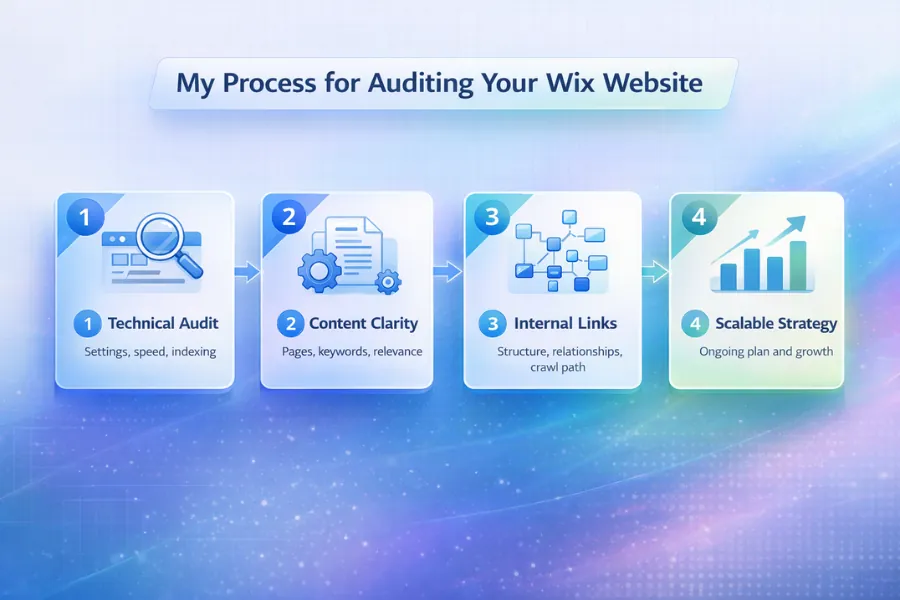
Wix SEO audit framework showing technical audit, content clarity, internal links, and scalable strategy

A Wix SEO audit looks at how your website is built, how Google reads it, and where growth is blocked. It is not just about keywords. It checks structure, indexing, content alignment, and technical signals that affect ranking. The goal is simple. Find what is holding the site back and fix it in the right order.

Here is how the process works.

This is the foundation. First, I check how Google crawls and indexes your site.

That includes:

  • Index status in Google Search Console
  • Crawl errors and excluded pages
  • Sitemap accuracy
  • Redirect setup
  • Page speed and Core Web Vitals

If Google cannot crawl your site properly, content improvements will not matter. Technical clarity comes first.

Next, I review how pages target search intent. Many Wix websites have pages that compete with each other. This is called keyword cannibalization. It confuses Google. I map each important keyword to one clear page. Every page must have a purpose.

This step focuses on:

  • Clear service or topic targeting
  • Removing duplicate intent
  • Improving headings and content depth
  • Aligning pages with real search queries

When structure matches intent, rankings become more stable.

Internal links help Google understand importance and relationships between pages. If key pages are buried or isolated, they lose strength.

I check:

  • Which pages receive the most internal links
  • Whether service pages are connected properly
  • If blog content supports core pages
  • Anchor clarity without over-optimization

I also review entity signals. That means making sure topics are clearly connected and consistent across the site. Clear signals build trust.

Structured data adds context behind the page. It tells Google what type of page it is. In Wix, schema must be added carefully and matched to content.

I review:

  • Service schema
  • FAQ schema
  • Breadcrumb markup
  • Organization or Person markup

Schema does not guarantee rankings. But when aligned correctly, it improves how Google interprets your content and may improve how your result appears in search.

Inside here, you can naturally mention:

  • If store-based → deeper strategy aligns with eCommerce SEO consultant framework
  • For structured audits → reference your eCommerce SEO audit checklist (if relevant)

Example natural insert:

For online stores built on Wix, I apply the same structured audit principles I use in broader eCommerce SEO audits — especially around category depth and product index control.

Smooth. Not forced.

Wix SEO vs WordPress vs Shopify

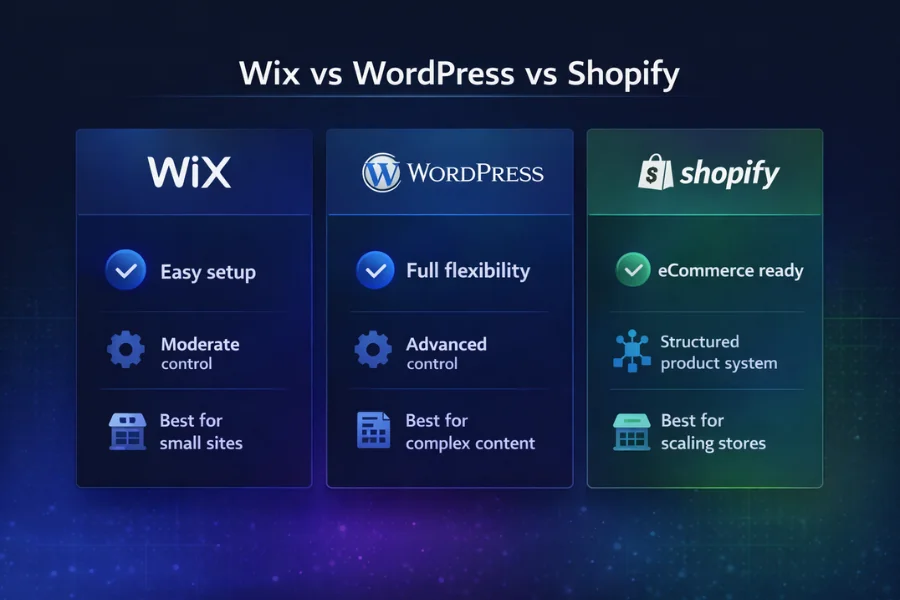
Comparison of Wix, WordPress, and Shopify for SEO control and scalability

All three platforms can rank in Google. The difference is control. SEO performance often depends on how much flexibility you have over structure, templates, and technical setup. Each system handles this differently. Wix is simple and fast to launch. WordPress offers deeper control. Shopify is built for eCommerce scale.

Here is how they compare.

Wix: Simple Setup, Moderate Control

Wix is easy to use. It supports:

  • Custom URLs
  • Meta titles and descriptions
  • Redirects
  • Basic structured data

For small business and service websites, this is usually enough. However, template flexibility and advanced technical control are more limited. Large-scale structural customization is harder compared to open systems. Wix works best when the site structure is clean and focused.

WordPress: Maximum Flexibility

WordPress gives more control over:

  • Server-level settings
  • Plugins and technical tools
  • Custom schema logic
  • Deep template editing

This flexibility is powerful. But it also requires more maintenance and technical skill. For content-heavy sites or complex SEO strategies, WordPress often provides more room to scale.

Shopify: Built for eCommerce Scale

Shopify is designed for online stores. It handles:

  • Product structure
  • Category hierarchy
  • Checkout and performance
  • Basic SEO features

However, some URL and structural limits exist. Advanced customization may require theme edits or apps. For serious eCommerce growth, structure becomes critical. SEO at this level goes beyond product pages and into architecture planning.

Platform architecture directly affects crawl behavior, index depth, and scalability. Different systems respond differently when a site grows large or complex. These structural differences are explored more broadly in this CMS SEO fundamentals guide.

Case Example: Fixing Structural SEO Issues in Wix

Imagine a local home service business using Wix. The website has five service pages and a blog. The design looks clean. But traffic is low, and some pages do not appear in Google at all. In Google Search Console, several pages show as “Crawled – currently not indexed.” This usually means Google saw the page but did not think it was strong enough to rank.

Here is what the audit might reveal:

  • Two service pages targeting the same keyword
  • Weak internal links between core pages
  • Thin content that does not match search intent
  • No structured data to clarify page type
  • A sitemap that includes low-value pages

The fix would focus on structure, not more content.

Each service page would get one clear keyword focus. Internal links would guide Google toward the most important pages. Thin or duplicate pages would be improved or removed. Structured data would match the page purpose. Over time, indexing improves. Rankings stabilize. Traffic grows gradually, not instantly.

This is how technical SEO works on Wix. Clear structure leads to clearer signals. Clear signals lead to better visibility.

 
FAQ

Wix SEO FAQs

Is Wix good for SEO in 2026?

Yes, Wix is good for SEO when set up correctly. It supports clean URLs, meta tags, redirects, and custom structured data. Google confirmed that Wix can rank like other platforms. Most ranking problems come from weak structure or poor content, not the platform itself.

Most Wix websites fail to rank because of indexing issues, weak keyword targeting, or thin content. Pages may compete with each other or lack internal links. Sometimes Google crawls a page but does not index it because it sees low value or unclear intent.

Yes, Wix allows custom JSON-LD schema to be added to pages. This includes FAQ, service, breadcrumb, and organization markup. However, schema must match the page content. Incorrect or duplicate schema will not improve rankings and may be ignored by Google.

Wix SEO results usually take 2 to 4 months for noticeable improvement. This depends on competition, site age, and how many structural fixes are needed. SEO is gradual. Indexing and ranking stability improve step by step, not overnight.

The most important factor is clear site structure. Each page should target one main topic with strong internal links and matching search intent. Technical setup matters, but structure and content clarity usually drive long-term ranking growth.

Work With a Wix SEO Consultant

If your Wix website is not growing in search, the first step is clarity. You need to know what is blocking performance and what to fix first.

A structured Wix SEO audit typically includes:

  • Full technical review (crawl, indexing, speed, sitemap)
  • Keyword-to-page mapping to prevent overlap
  • Content improvement plan for key pages
  • Internal linking review
  • Structured data and schema check
  • Clear priority roadmap for the next 60–90 days

You receive a written report with specific actions. No vague advice. No generic checklist. Just focused steps based on your website.

If your goal is steady, long-term ranking growth, this is where it starts. You can request a detailed audit review and discuss whether your Wix setup supports your growth plans.

Stay Connected

Let’s Work Together!

Phone +880-1713-249436