Google Business Profile Optimization Checklist (Ranking Validation Framework)
This is not a setup guide. It is a validation checklist. Many businesses fill out every field in their Google Business Profile and still do not rank well. The profile looks complete. But visibility stays low. That usually means one thing. The profile is finished, but the ranking signals are weak.
This checklist helps you review those signals. It looks at relevance, proximity, prominence, and engagement. These are the real factors that influence Google Maps and local search results.
Think of this as a control sheet. You use it to test what is strong and what needs work. It helps you find gaps before competitors move ahead. No hype. No tricks. Just a clear way to check if your Google Business Profile is truly optimized for ranking.
Why a Checklist Is Different from a Setup Guide
A setup guide shows you how to create and fill out your profile. It walks you through the fields. It explains what to enter and where to click. That is important. But it is only the starting point. A checklist does something different. It helps you test if your profile is strong enough to compete. It looks at the signals that affect rankings, not just the settings.
If you need help creating or configuring your profile the right way, you can follow my full Google Business Profile Optimization guide. This checklist builds on that foundation. It checks whether your optimization is actually working.
Optimization vs Validation — What Most Businesses Miss
Optimization means you add details, categories, services, photos, and posts. You complete everything. Validation means you ask a harder question. Is this strong enough to rank in your area?
Most businesses stop after optimization. They assume that a complete profile will rank. But Google does not reward completion alone. It looks at quality, relevance, activity, and competition. Validation forces you to compare your profile against top competitors. It helps you measure real strength, not just effort.
Why Fully Completed Profiles Still Fail to Rank
A profile can be 100 percent complete and still sit below competitors.
That happens when:
- Categories are too broad
- Reviews are slow or generic
- Replies do not reinforce services
- Photos are outdated
- Engagement is low
Google looks at patterns. It watches how users interact with your profile. It evaluates how clearly your business connects with local search intent. If those signals are weak, rankings stay weak. This is where many businesses get stuck. They complete the setup but never move into deeper optimization.
A properly structured profile, like the one outlined in the Google Business Profile Optimization Guide, builds the right foundation. But structure alone does not guarantee strong rankings. That foundation still needs validation. This checklist helps you test whether your optimization is strong enough to compete.
Foundation Optimization Checklist
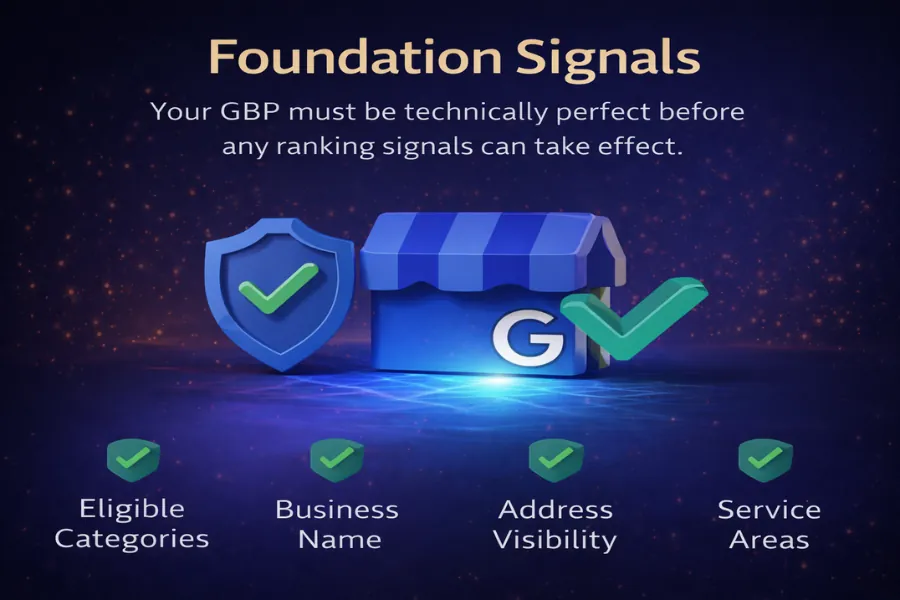
Before you think about reviews, posts, or engagement, you need a strong base. If the foundation is weak, nothing else will hold for long. These checks focus on accuracy, compliance, and clean structure. This is where many ranking problems begin.
Business Name Compliance (No Keyword Manipulation)
Your business name should match your real-world name. Nothing extra. Adding keywords to the name might seem smart. It might even work for a short time. But it goes against Google’s rules. It can lead to edits, suspensions, or trust issues.
A clean and accurate business name builds long-term stability. If competitors are stuffing keywords, do not copy them. Focus on sustainable ranking, not shortcuts.
NAP Consistency & Entity Alignment
NAP stands for Name, Address, and Phone number.
These details must match everywhere online. Your website, directories, and social profiles should show the same information. Even small differences can confuse search engines.
Google tries to understand your business as a clear entity. When your NAP is consistent, it strengthens that identity. When it is inconsistent, it weakens trust signals.
Primary & Secondary Category Accuracy
Your primary category is one of the strongest ranking signals in Google Business Profile. It should clearly match your main service. Not what sounds popular. Not what competitors are using blindly. It must reflect what you actually do. Secondary categories support the main one. They should expand your relevance, not dilute it. Adding too many unrelated categories can hurt clarity.
Duplicate Listing Detection & Suppression
Duplicate listings split signals. If the same business appears twice with similar details, reviews and engagement can get divided. That weakens ranking strength. Search for your business name, phone number, and address variations. If you find duplicates, request removal or merge them properly. Clean listings mean stronger consolidated authority.
Ownership & Access Control Integrity
You should have full control over your profile. Check who has owner or manager access. Remove old employees or unknown users. Keep access limited to trusted accounts. If ownership is unclear or shared loosely, it creates risk. Strong control protects your profile from unwanted edits, suspensions, or internal mistakes.
A stable foundation is not exciting. But without it, no optimization strategy will last.
Relevance Optimization Checklist
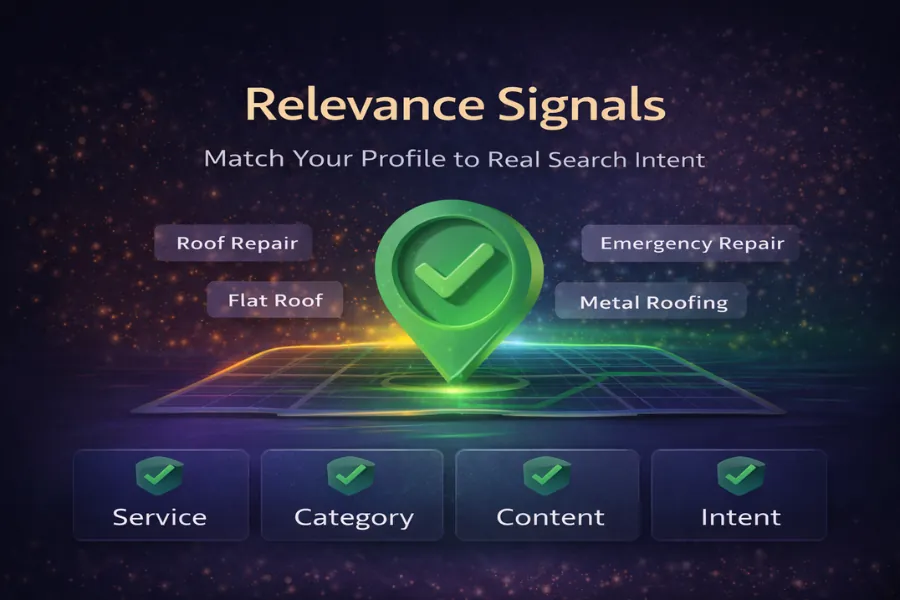
Relevance means one simple thing. Does your profile clearly match what people are searching for?
Google tries to connect search intent with business profiles. If your profile does not clearly show what you offer, it will not rank well for those searches. This section helps you check if your profile truly reflects your services.
Service-Level Keyword Alignment
Each service you offer should be clear and specific. Do not rely only on your business category. Add your main services inside the Services section. Use simple and natural wording. Write them the way real people search.
For example, do not just write “Consulting.” Be specific. Write “Local SEO Consulting” or “Google Business Profile Optimization.” If your services are vague, Google cannot match you with clear search intent.
Business Description Semantic Structuring
Your description is not just a summary. It helps Google understand your focus. Write in clear sentences. Mention your main services. Mention your location if relevant. Keep it natural. Do not repeat the same keyword again and again. Think about how a person would describe your business out loud. That tone works best. Clear language builds strong relevance.
Product & Service Card Optimization
Many businesses ignore this section. If you sell products or offer service packages, list them properly. Add short descriptions. Be specific about what is included. This helps in two ways. It improves user clarity. It also strengthens service-level relevance signals inside your profile. A blank or thin Products section is a missed opportunity.
Q&A Intent Reinforcement
The Q&A section can support relevance if used correctly. Add common questions that real customers ask. Then answer them clearly. Mention your service naturally in the answer.
For example, someone may ask, “Do you offer emergency repair?” Your answer should confirm it clearly and mention the service. This reinforces intent signals without looking forced.
Attribute & Feature Optimization
Attributes help Google understand your business type and features. These include things like service options, accessibility, payment methods, and special features. Choose only what truly applies to your business. Accurate attributes improve clarity. Wrong or random attributes create confusion.
Relevance is not about adding more words. It is about making your profile clearly match what you actually do.
Proximity & Near Me Optimization Checklist
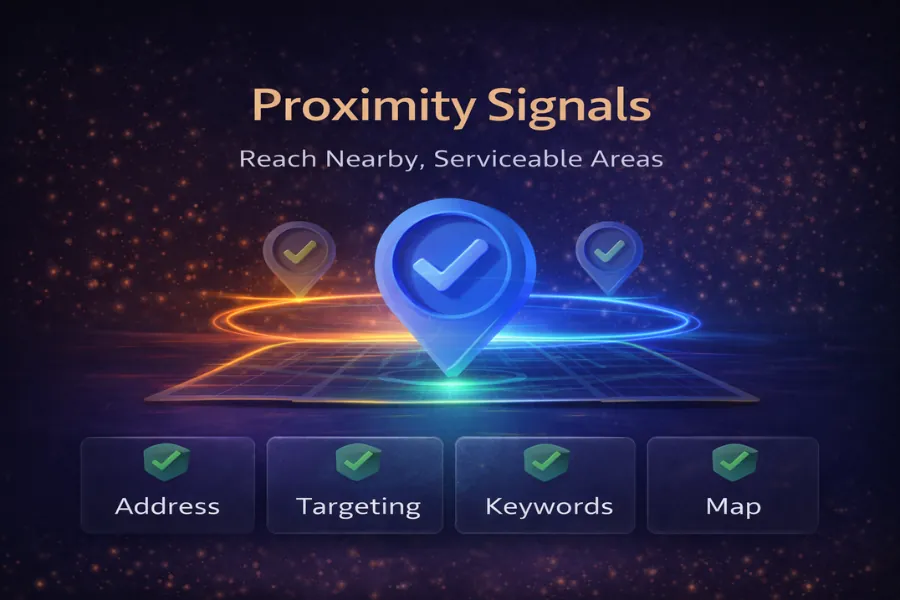
Proximity seems simple. Google often shows businesses that are closest to the person searching. But ranking is not based on distance alone.
Google looks at where the search happens. It checks how clearly your business connects to that location. It also compares your local signals with competitors nearby. This section helps you review whether your proximity signals are strong enough.
Address vs Service Area Strategy
If customers visit your location, your address must be exact. Your map pin should sit precisely where your business operates. Small errors can affect visibility.
If you run a service area business, select only the areas you truly serve. Expanding your service area too far does not help you rank everywhere. It often weakens your local focus. Clear and honest location settings build stability.
Geo-Relevance Signal Reinforcement
Your profile should show real connection to your city. Mention your main location naturally in your description. Use real photos from your area. Highlight local work when relevant. This is not about repeating city names. It is about showing real presence.
When Google sees consistent local signals, it becomes easier to match your profile with nearby searches.
Map Pack Radius & Location Sensitivity Testing
Search results change depending on where the user is located. You may rank well close to your address but drop further away. That is normal in competitive markets.
Testing searches from different parts of your city shows your true visibility range. It also reveals how Google handles local intent. I explain this more deeply in my article on ranking for local SEO near me search terms, where I break down how distance and intent shape Map Pack results. Understanding this helps you set realistic expectations and adjust your strategy.
Location-Based Landing Page Alignment
Your website should support your location signals. If you target specific cities or neighborhoods, your site should reflect that clearly. Location pages should match your services and real operating areas. This alignment becomes even more important when competing for ranking for local SEO near me search terms, where proximity, intent, and page relevance work together. Clear location pages strengthen that connection.
When your website and Google Business Profile tell the same local story, Google gains more confidence in your relevance. Proximity is partly about geography. But mostly, it is about clarity and consistency.
Prominence Optimization Checklist
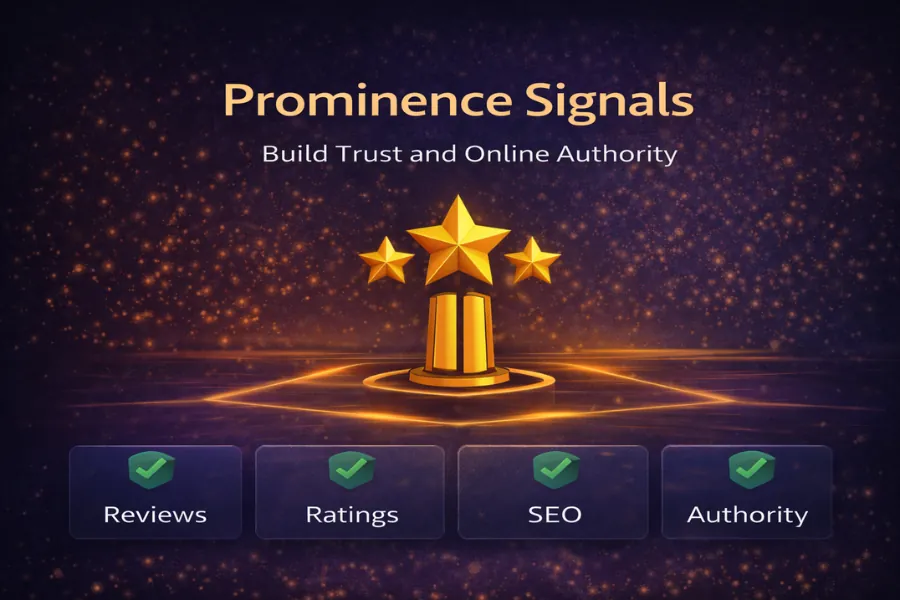
Prominence is about trust and visibility.
Google wants to rank businesses that look real, active, and well known in their area. It looks at reviews. It looks at mentions across the web. It looks at how strong your brand appears compared to others nearby.
You cannot fake prominence for long. It builds over time through steady signals.
Review Velocity & Review Diversity
Review velocity means how often you get new reviews.
If you get many reviews in one week and then nothing for months, that pattern looks unnatural. A steady flow of reviews is stronger than short bursts.
Review diversity also matters. Reviews should come from different people over time. They should mention real services and real experiences. Google does not just count reviews. It looks at patterns.
Review Reply Reinforcement Strategy
Replying to reviews is not just polite. It reinforces relevance.
When you reply, mention the service naturally. Keep it simple and human. Do not copy and paste the same message every time.
For example, if someone reviews your emergency repair service, your reply can mention that service clearly. This strengthens topic signals inside your profile. Good replies help both users and search engines understand what you do.
Citation & Third-Party Profile Consistency
Your business should appear consistently across trusted directories and platforms.
Your name, address, and phone number should match everywhere. Even small differences can weaken trust signals. Google compares these profiles to confirm that your business is real and stable.
Clean citations support prominence. Messy ones reduce confidence.
Local Brand Mentions & Authority Signals
Prominence also grows when other sites mention your business.
This could include local blogs, news sites, event pages, or community listings. When your brand appears in local context, it strengthens your local footprint.
You do not need hundreds of mentions. A few real, local references are more valuable than many random ones.
Link Signals Supporting GBP
Your website still plays a role in prominence. Strong internal structure, relevant content, and quality backlinks support your Google Business Profile. When your website earns trust, that authority can support your local presence. Google sees your profile and your website as connected.
Prominence is not built overnight. It grows through consistent activity, real reviews, and clear signals across the web.
Behavioral Optimization Checklist
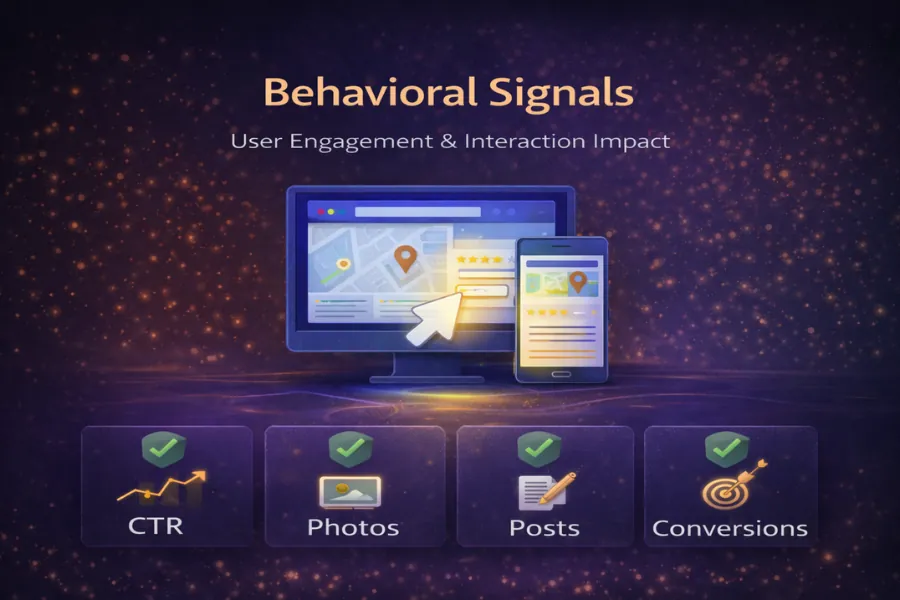
Behavioral signals show how people interact with your profile. Google does not only read your content.
It watches:
- what users do?
- Do they click?
- Do they call?
- Do they request directions?
- Do they leave quickly?
Strong engagement tells Google that your profile is useful. Weak engagement sends the opposite signal. This section helps you review how users behave when they see your listing.
Click-Through Rate (CTR) Optimization
CTR means how often people click your profile when it appears in results. If your profile shows up but no one clicks, Google may lower your visibility over time.
Your business name, category, reviews, rating, and photos all affect clicks. A strong star rating and recent reviews can increase trust instantly. Clear photos and accurate categories help users feel confident enough to tap your listing.
Photo Engagement & Visual Freshness
Photos are not decoration. They influence behavior. Profiles with updated, real photos often receive more clicks and interactions. Old or low-quality images reduce interest.
- Upload clear photos of your location, services, products, and team.
- Add new images regularly so your profile does not look inactive.
Fresh visuals signal that your business is active.
Posting Frequency & Content Activity Signals
Regular posts show that your business is alive. You do not need to post every day. But long periods of silence can weaken engagement signals. Share updates, offers, service highlights, or small announcements. Keep it simple and useful. Consistent activity supports behavioral strength.
Messaging & Response Time Optimization
If messaging is enabled, respond quickly. Fast replies improve user experience. Slow responses reduce trust.
Google may factor response behavior into engagement signals. Even if it does not directly boost ranking, it improves conversion and customer confidence. Active communication builds strong behavioral patterns.
Conversion Signal Strength (Calls, Directions, Bookings)
Calls, direction requests, and bookings are powerful actions. When users frequently take these actions, it tells Google that your profile matches search intent. Encourage clear action through accurate information and strong visuals. Make sure your phone number works. Make sure directions lead to the correct location.
Behavioral signals are not about tricks. They are about real user interaction. When people engage with your profile consistently, visibility tends to improve over time.
Ongoing GBP Optimization Maintenance Framework
Optimization is not a one-time task. Google updates local results often. Competitors improve their profiles. Reviews grow. Categories shift. Rankings move. If you stop checking your profile, small issues can grow into bigger problems. This section helps you stay in control.
Weekly Control Checklist
Once a week, review the basics.
- Check for new reviews and reply to them.
- Add fresh photos if needed.
- Post a short update if your profile has been quiet.
- Make sure business hours are correct.
Also search your main keywords and see where you appear. Small drops can signal early problems. Weekly checks keep your profile stable.
Monthly Competitive Gap Review
Once a month, look at your top competitors.
- Are they gaining more reviews than you?
- Did they add new categories?
- Are their photos stronger?
- Do they appear more active?
Compare their profile strength to yours. This shows where you are falling behind. A simple monthly review can prevent long-term ranking loss.
Tracking Map Pack Volatility
Local rankings are not fixed. You may rank in the top three one week and drop the next. That does not always mean you made a mistake. Sometimes Google tests new results. Track changes over time instead of reacting to one-day drops. Look for patterns, not single movements.
If rankings shift across your entire area, it may be a broader update. If only your profile drops, investigate your signals. Stability comes from consistent monitoring.
Performance Insights & UTM Validation
Use the insights inside your Google Business Profile.
Watch:
- trends in calls,
- direction requests,
- website clicks, and searches,
- Are they increasing or decreasing?
If you link to your website, use proper UTM tracking. This helps you measure traffic accurately in your analytics.
Data removes guesswork. When you track performance clearly, you can adjust your strategy with confidence. Maintenance is not exciting. But it protects everything you built. Consistent monitoring keeps your profile competitive over time.
Download the Google Business Profile Optimization Checklist & Scorecard
A checklist is helpful. But a scorecard makes it measurable.
This scorecard lets you rate each signal in your profile. You can score foundation, relevance, proximity, prominence, and engagement. Instead of guessing, you see where you are weak.
For example, you might score high in categories but low in review consistency. Or strong in reviews but weak in proximity alignment. When you score each section, priorities become clear.
Some businesses prefer to review this internally. Others choose to have a local SEO expert evaluate the scorecard and build a structured improvement plan. Use the scorecard once a month. Track changes over time. Improvement becomes visible, not assumed.
How This Checklist Fits into a Complete Local SEO Strategy
Your Google Business Profile is only one part of local visibility. It works best when your website, content, and local signals all support it. When everything aligns, rankings become more stable.
Local search influences how customers discover and trust businesses. That is why local SEO matters in 2026, especially as competition and search behavior continue to evolve.
Local visibility is not built on one platform alone. It depends on how your profile, website, and supporting signals connect together. That full structure is brought together inside the Local SEO Hub, where each layer supports the next.
This checklist helps you validate your profile. But strong local performance comes from aligning every layer, not just one.
Clarity creates stability. Consistency builds rankings.
Frequently Asked Questions
What is a Google Business Profile optimization checklist?
A Google Business Profile optimization checklist is a structured way to review your profile. It helps you check whether your ranking signals are strong enough. This includes categories, reviews, location signals, engagement, and overall activity.
It is not about filling out fields. It is about testing if your profile is competitive in your area.
How is an optimization checklist different from a GBP setup guide?
A setup guide shows you how to create and configure your profile. An optimization checklist checks if that setup is strong enough to rank.
Think of it this way. The guide builds the profile. The checklist measures its strength. Both are useful. But they serve different purposes.
Why does my Google Business Profile still not rank after optimization?
There are many possible reasons.
- Your competitors may have stronger reviews.
- Your primary category may not match search intent clearly.
- Your engagement signals may be weak.
- Your proximity range may be limited.
Ranking is based on comparison. Even a complete profile can struggle if nearby competitors send stronger signals.
How often should I run a GBP optimization audit?
A light review once a week is helpful. A deeper audit once a month is usually enough for most businesses.
If you are in a competitive market, you may need to check more often. The key is consistency. Small adjustments over time work better than rare large changes.
Does a Google Business Profile checklist improve Map Pack rankings?
The checklist itself does not increase rankings. What improves rankings is fixing the weak areas you find during the review.
When you strengthen relevance, improve review patterns, and maintain activity, visibility can improve over time. The checklist simply helps you focus on the right areas.
Can I use the same checklist for multiple business locations?
Yes, but each location should be reviewed separately. Every location has different competitors, review patterns, and proximity behavior.
A checklist provides structure. But the results and actions may differ for each branch. Local search is always location-specific.
