What Is Shopify SEO?
Shopify SEO is about how a Shopify store is structured so search engines can understand and rank it correctly. Unlike content-only SEO, Shopify SEO focuses on how products, collections, and URLs are created and connected. These structural elements influence which pages search engines see as important and how authority flows across the store.
Simple Definition of Shopify SEO
Shopify SEO is the process of optimizing a Shopify store’s structure, collections, and indexing behavior so search engines can crawl, understand, and rank its pages effectively. It goes beyond page text. It includes how Shopify generates URLs, groups products, and signals page importance.
Shopify SEO vs General eCommerce SEO
Shopify does not behave like open or custom eCommerce platforms.
It uses fixed rules for:
- Product URLs
- Collection paths
- Page templates
General eCommerce SEO often assumes full control over structure and technical settings. On Shopify, that control is limited by design. Because of this, SEO strategies that work well on other platforms may produce weaker or temporary results on Shopify if platform rules are ignored. Shopify SEO works by adapting SEO fundamentals to the way Shopify actually operates.
How Shopify’s Platform Affects SEO
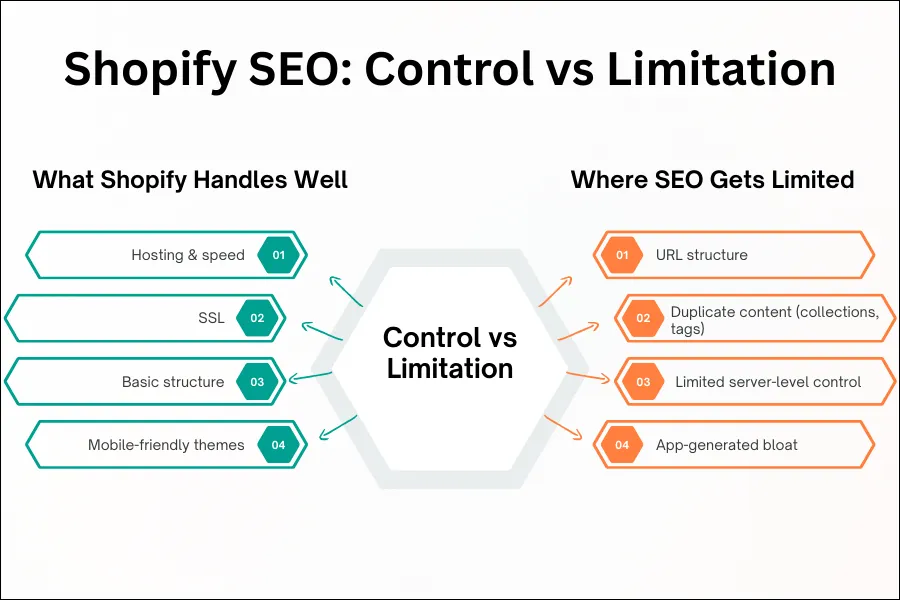
Shopify’s platform design plays a direct role in how search engines crawl, index, and rank a store. Some SEO elements are handled automatically. Others are shaped by fixed platform rules. Understanding this balance explains why Shopify SEO behaves differently as stores grow. Many of these differences stem from how the underlying content management system controls structure, indexing logic, and template behavior. A broader understanding of CMS SEO helps explain why platform-level architecture influences long-term visibility.
Shopify URL Structure and SEO
Shopify uses fixed URL paths for key page types.
- Products follow one structure
- Collections follow another
- These paths cannot be freely customized
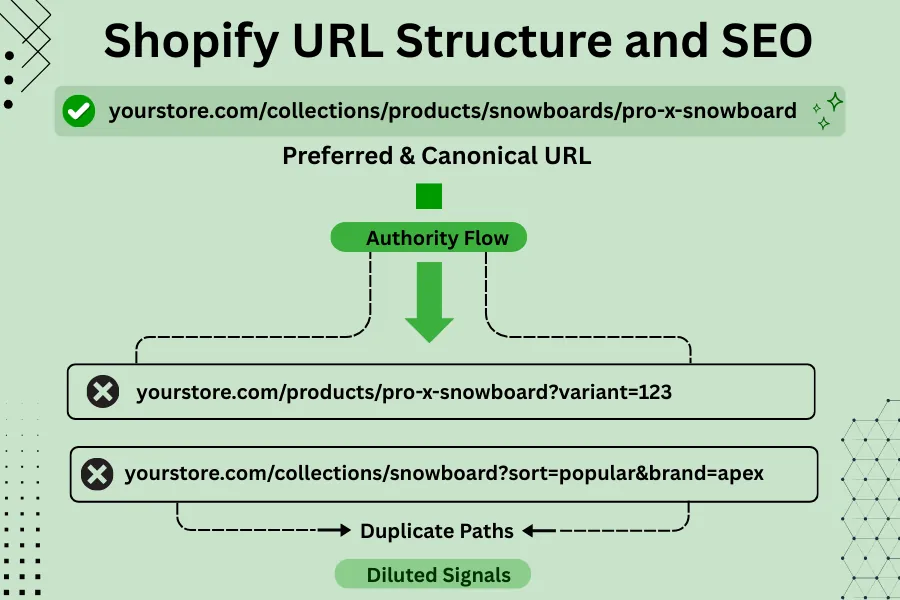
This consistency helps Shopify manage stores at scale, but it limits structural flexibility. Search engines rely heavily on URL patterns to understand relationships between pages. When those patterns are fixed, SEO has to work within them.
As a result, internal linking and page hierarchy become more important than URL customization.
How Collections Shape Search Visibility
Collections are the backbone of Shopify navigation.
They:
- group products
- guide internal links
- signal page importance
Search engines often treat collection pages as primary category signals. When collections are well-structured, they help clarify which products and topics matter most. When collections overlap or lack clear focus, visibility becomes diluted. On Shopify, collections often carry more SEO weight than individual products, especially for broader search terms.
What Shopify Handles Automatically
Shopify manages several SEO basics by default.
These include:
- automatic sitemap generation
- basic metadata support
- consistent page templates
These features reduce setup friction and help ensure stores are crawlable from the start. However, they operate at a general level and are not tailored to individual store goals. Automatic does not mean optimized. It means standardized
What Shopify Does Not Control for SEO
Shopify does not decide which pages deserve priority in search.
It does not:
- define search intent
- choose which collections should rank
- manage authority flow between pages
- resolve scale-related conflicts
These decisions depend on how the store is structured and how pages are connected. As catalogs grow, this gap becomes more noticeable. Effective Shopify SEO fills in these gaps by aligning structure with search intent and long-term growth goals.
Why SEO Problems Are Common on Shopify Stores
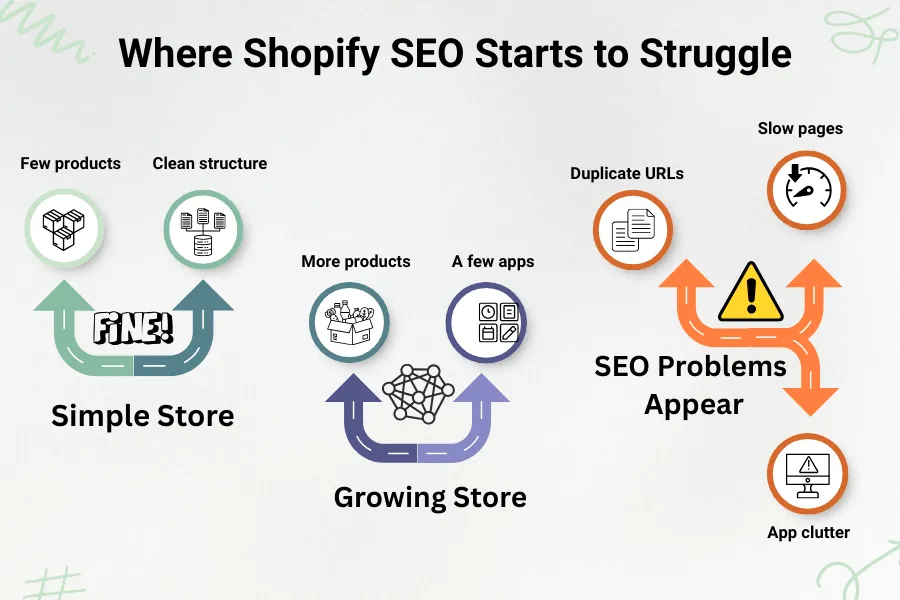
SEO issues on Shopify are common because the platform is designed for ease of use and speed to launch, not for fine-grained SEO control. As a store grows, small platform behaviors can quietly create search problems — even when the store is well managed.
Duplicate Pages From Collections and Variants
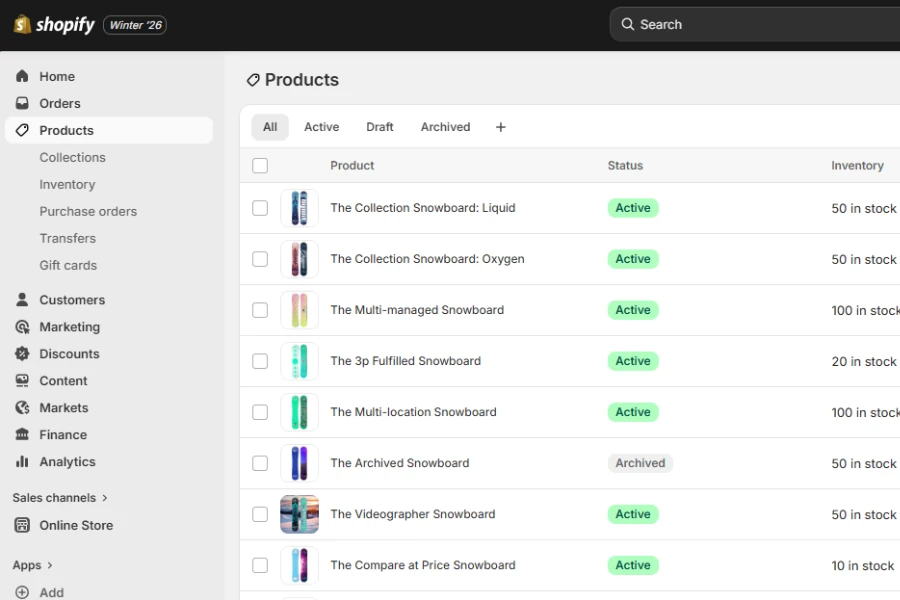
Shopify allows the same product to appear in multiple collections. This is useful for merchandising, but it can create multiple URLs that show very similar content. Product variants can also share near-identical information across pages.
Search engines treat each URL as a separate page. When many pages look alike, ranking signals get split. Important pages lose clarity, and search visibility becomes inconsistent. This duplication is structural, not accidental.
Filters, Sorting, and Extra URLs
Shopify stores often generate extra URLs through:
- collection filters
- sorting options
- tracking parameters
These URLs may not add real value, but search engines can still crawl them. Over time, this increases the number of low-value pages search engines have to process. When crawl resources are spread too thin, key pages may be indexed less often or updated more slowly. This issue usually grows as catalogs and traffic increase.
App-Generated SEO Side Effects
Apps are a core part of Shopify’s ecosystem. They can add useful features, but they may also:
- inject additional scripts
- create new URLs or page elements
- affect page speed and rendering
Each app is built independently. When multiple apps interact, small SEO side effects can stack up without being obvious. These effects are rarely intentional, but they can influence crawl behavior and page performance over time.
SEO Changes That Break Over Time
A common frustration is SEO that works briefly, then stops.
Changes may break after:
- theme updates
- app changes
- catalog growth
This happens when fixes address surface symptoms instead of underlying platform behavior. Shopify continues to generate pages the same way, so issues reappear. When SEO improvements feel temporary, it usually means the system hasn’t been fully aligned yet.
How Shopify SEO Changes as Stores Grow
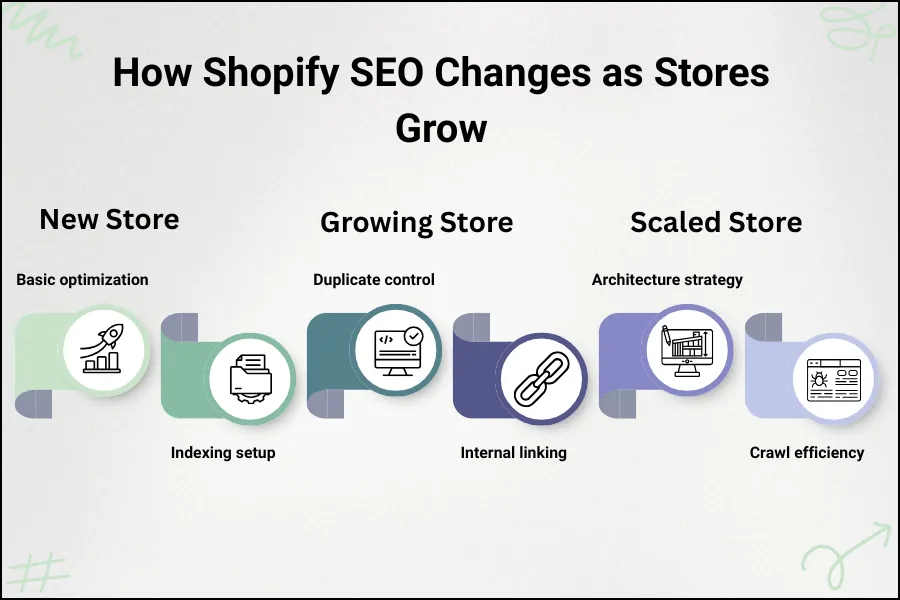
Shopify SEO does not stay the same as a store expands. What works for a small catalog can become less effective as products, collections, and URLs increase. Growth changes how search engines interact with the store.
Small Stores vs Growing Catalogs
Small Shopify stores usually have simple structures.
- fewer products
- fewer collections
- clearer internal links
At this stage, search engines can understand the site easily. Even basic SEO setups may perform well. As catalogs grow, structure starts to matter more. Without clear rules, new products and collections are added in ways that create overlap. Search engines receive mixed signals about which pages are most important. SEO shifts from page-level work to structural organization.
Authority Flow Across Products and Collections
Search engines distribute authority through internal links. On Shopify, collections often act as hubs that pass authority to products. If collections are unclear or compete with each other, authority gets spread too thin.
This is why:
- some products never rank
- important collections underperform
- visibility feels uneven
It’s not always about content quality. It’s often about how authority moves through the store. Clear hierarchy helps search engines understand which pages should lead.
Crawl Efficiency at Scale
Search engines have limited crawl resources for each site. As a Shopify store grows, the number of URLs increases through:
- new products
- additional collections
- filters and parameters
If many low-value URLs exist, search engines spend time crawling pages that don’t need to rank. Important pages may be visited less often or updated more slowly in search results. At scale, efficient crawling becomes just as important as on-page optimization. This is the point where Shopify SEO becomes more about managing the system than fixing individual pages.
Large content ecosystems often rely on flexible CMS architecture to control crawl behavior and internal structure.
When Shopify SEO Becomes a Bottleneck
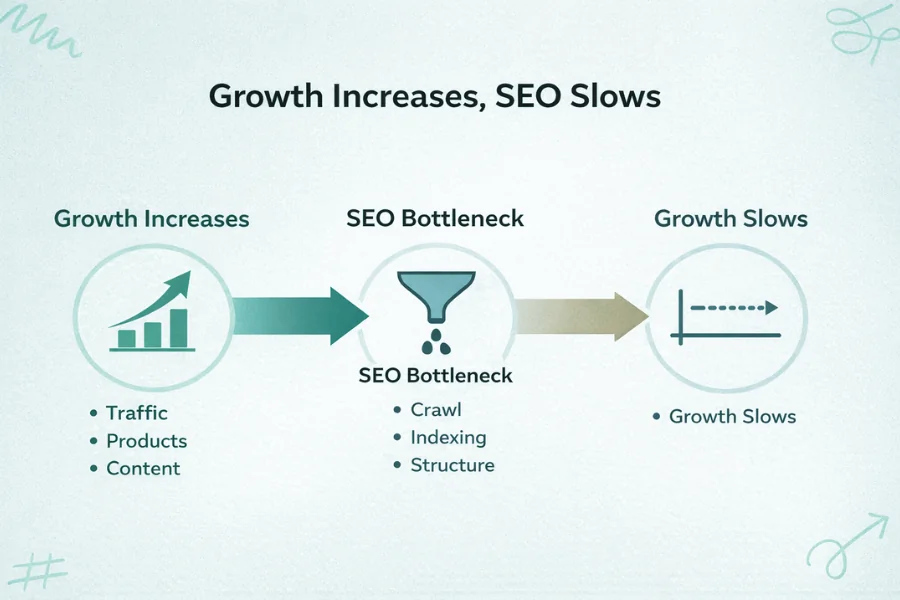
SEO usually doesn’t fail suddenly on Shopify. It slows down. As stores grow, the platform’s fixed behavior can start to limit how much organic visibility improves — even when effort increases. At this stage, using an eCommerce SEO audit checklist can help identify whether structural issues in a Shopify store are limiting organic search performance.
Traffic Plateaus Despite New Products
A common sign is stalled organic traffic. New products are added. Collections expand. Content improves. Yet search traffic stays flat. This often happens when Shopify’s structure no longer sends clear signals about page importance. Search engines see more pages, but not more clarity. Growth adds pages, not direction.
Paid Ads Drive Most Visibility
Many Shopify stores rely heavily on paid ads to maintain sales. Ads can bring quick traffic, but when organic visibility doesn’t grow alongside them, costs rise and margins tighten. This usually means SEO is being limited by structure, not demand. When ads become the primary visibility channel, organic search is often underperforming due to platform-related constraints.
SEO Fixes Feel Temporary
Short-lived SEO improvements are another signal.
Changes may help briefly, then fade after:
- theme updates
- app changes
- catalog expansion
This pattern suggests that fixes are being applied at the surface level, while Shopify continues to generate the same underlying issues. When SEO doesn’t hold, the system usually needs adjustment.
Expansion Creates SEO Confusion
Expansion adds complexity. New markets, languages, or product lines increase the number of URLs and internal links. Without clear structure, search engines struggle to understand which pages should rank. Visibility becomes uneven. Some pages perform, others disappear.
At this stage, SEO problems aren’t isolated — they’re structural. When these signs appear together, Shopify SEO often shifts from simple optimization to managing limits within the platform.
Learning Shopify SEO vs Getting Help
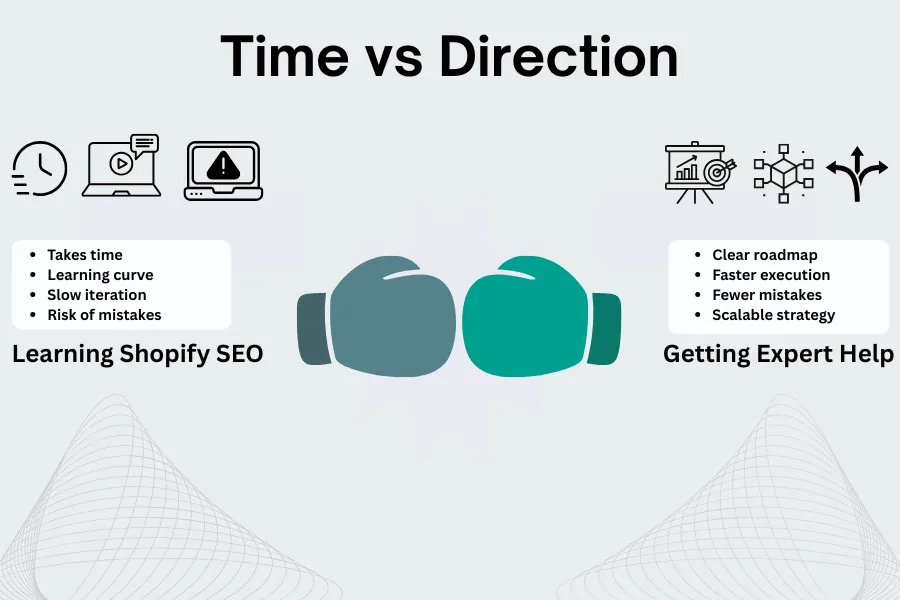
Not every Shopify store needs professional SEO support right away. The right approach depends on store size, structure, and how complex SEO issues have become.
When structural limitations, crawl inefficiencies, or scaling challenges begin affecting performance, guidance from a Shopify SEO consultant can help align platform constraints with sustainable growth.
When Education Is Enough
For early-stage Shopify stores, learning the basics of Shopify SEO can be enough.
Smaller catalogs with:
- limited products
- simple collections
- minimal app usage
often benefit from understanding how Shopify handles structure and indexing. At this stage, clear organization and basic SEO awareness can support steady growth. Education helps store owners avoid early mistakes and build a cleaner foundation.
When Platform Expertise Matters
As stores grow, Shopify’s limits become more noticeable.
Structural issues such as:
- overlapping collections
- authority dilution
- crawl inefficiency
- fragile SEO fixes
are harder to solve through learning alone. At this point, working with a Shopify SEO Consultant can help align SEO decisions with the platform’s behavior and support growth that holds as the store scales.